In the wake of the dramatic arrest and extradition of Venezuelan leader Nicolás Maduro to New York, Canada's official response has emerged as a masterclass in diplomatic equivocation. Foreign Minister Anita Anand's statement, issued on January 5, 2026, walks a fine line, simultaneously condemning the Maduro regime while cautiously invoking the sanctity of international law. This nuanced position, however, risks satisfying no one, particularly a Trump administration in Washington that historically demands clear allegiance.
The Anatomy of a Cautious Statement
The federal government's reaction, disseminated via social media platform X, opens with a clear denunciation. It reiterates Canada's long-standing position of not recognizing the legitimacy of Nicolás Maduro's regime and condemns its repression and persecution of political opponents. The subtext is an implicit agreement with the U.S. view that Maduro is, as author William Watson notes, "a nasty guy with no legitimacy."
Yet, the statement's second paragraph introduces a critical qualifier, calling on "all parties to respect international law." This carefully crafted phrase raises a question without directly assigning blame: was the operation that captured Maduro and his wife from their Caracas home—reportedly adjacent to a steel-walled safe room—a violation of legal norms? The formulation pointedly avoids accusing the United States, under President Donald Trump, of any illegality, but plants the seed of doubt.

A Message for Domestic Consumption?
The declaration concludes with Canada affirming it "stands by the people of Venezuela" and is "monitoring developments closely"—a phrase often interpreted as passive observation. As Watson critiques, this collection of diplomatic pieties may be designed more for a Canadian audience than an international one. Elements within the Liberal party's left wing, the NDP, and further left factions are often skeptical of American interventionism, especially under Trump. For them, the nod to international law provides necessary cover, implying discomfort with the method of Maduro's removal while not defending the man himself.
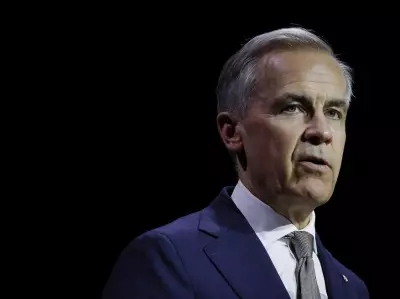
This tiptoeing was further reflected in a subsequent post from prominent figure Mark Carney, who welcomed "the opportunity for freedom, democracy, peace, and prosperity for the Venezuelan people." The inherent contradiction, as highlighted in the analysis, is that this "opportunity" was created precisely by the U.S. action that Ottawa's statement subtly questions.
Why Washington May Not Be Impressed
The core of the critique posits that Canada's artfully ambiguous stance is likely to fall on deaf ears in the Trump White House. In a political environment often framed as "you're either with us or against us," hesitation is interpreted as opposition. Canada's attempt to preserve neutrality in what it labels a "moral crisis"—a concept evoked by a John F. Kennedy reference to Dante—may ultimately serve to weaken its standing with a key ally without garnering significant goodwill elsewhere.
The analysis suggests that such statements, while perhaps playing well domestically, fail to account for the binary nature of contemporary U.S. foreign policy under Trump. As a result, Canadian officials may already be drafting clearer, more aligned talking points for future discussions in the Oval Office, where nuanced diplomacy holds little currency.