In a firm and unified response, the leaders of several European nations and Canada have publicly rebuffed recent statements from former U.S. President Donald Trump and his aide regarding a potential American takeover of Greenland. The leaders issued a joint declaration on Tuesday, January 6, 2026, asserting that the mineral-rich Arctic territory "belongs to its people."
A Unified Front for Sovereignty
The pushback came directly from the leaders of France, Germany, Italy, Poland, Spain, and the United Kingdom, who stood alongside Danish Prime Minister Mette Frederiksen. Their collective statement left no room for ambiguity, emphasizing that Greenland is a self-governing territory within the Kingdom of Denmark and a part of the NATO alliance. "It is for Denmark and Greenland, and them only, to decide on matters concerning Denmark and Greenland," the leaders affirmed.
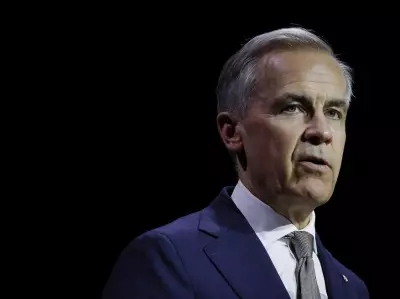
Canadian Prime Minister Mark Carney, standing beside Frederiksen at the Canadian Embassy in Paris, added his nation's strong support. He echoed the sentiment, stating, "The future of Greenland and Denmark are decided solely by the people of Denmark." Carney also announced a significant diplomatic visit scheduled for early February 2026, featuring Canada's Governor General Mary Simon—who is of Inuk descent—and Foreign Minister Anita Anand.

White House Comments Spark Alarm
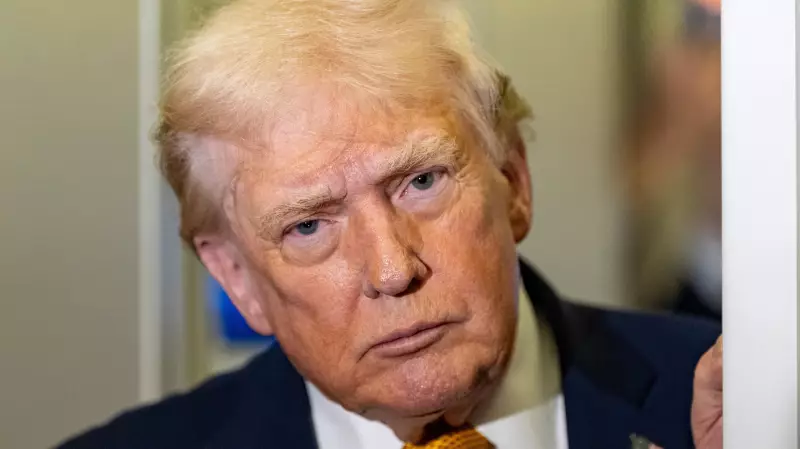
The European and Canadian reaction was prompted by comments from Trump and his deputy chief of staff, Stephen Miller. On Monday, January 5, Miller stated in a CNN interview that "the United States should be the nation that has Greenland as part of our overall security apparatus," questioning the basis of Denmark's claim to the island.
These remarks followed Trump's assertions on Sunday that the U.S. needs to control Greenland for national security, citing rising threats from China and Russia in the Arctic. "Greenland is covered with Russian and Chinese ships all over the place," Trump claimed, arguing Denmark is incapable of ensuring the territory's defense. Miller further dismissed concerns of military conflict, stating, "Nobody is going to fight the U.S. militarily over the future of Greenland."
The dispute gained traction after a social media post by Katie Miller, Stephen Miller's wife and a former Trump official, which featured an image of Greenland in U.S. colors with the caption "SOON." Prime Minister Frederiksen warned that Trump's comments "should be taken seriously" and that a U.S. attack on a NATO ally would mean the end of the alliance.
Greenland's Strategic and Economic Value
The intensity of the diplomatic row underscores Greenland's immense importance. The island, which sits off northeastern Canada, is crucial for North American defense, hosting the U.S.-operated Pituffik Space Base under a 1951 agreement with Denmark. It is also a key point for monitoring Russian naval movements through the GIUK Gap.
Beyond its military value, Greenland possesses vast deposits of rare earth minerals essential for modern technology and green energy solutions, alongside potential offshore oil and gas reserves. The island gained extended self-government in 2009, with international law recognizing its right to full independence—a move supported by most Greenlanders.
In Washington, a bipartisan group of U.S. lawmakers, including Reps. Steny H. Hoyer and Blake Moore, called for calm, labeling the annexation talk "needlessly dangerous." They noted that the U.S. already has significant access and defense permissions in Greenland through its NATO ally, Denmark.
Security experts also challenged Trump's characterization of the Arctic. Ulrik Pram Gad of the Danish Institute for International Studies noted that while Russian and Chinese ships are in the Arctic, they are "too far away to see from Greenland with or without binoculars." The united front from Canada and Europe now sets a clear boundary against any unilateral claims on the autonomous Arctic territory.