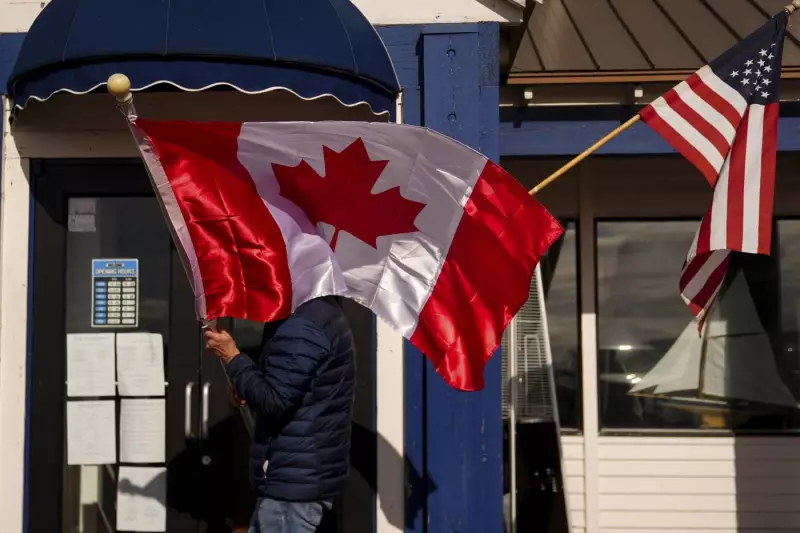
A stark new geopolitical assessment has placed Canada in a uniquely precarious position regarding its relationship with its southern neighbour. According to a report from the political risk consultancy Eurasia Group, no country is more at risk than Canada in its relations with the United States. The analysis, published on January 10, 2026, highlights the profound vulnerabilities Canada faces due to its deep economic integration and shared border with the global superpower.
The Core of Canada's Vulnerability
The report underscores that Canada's immense economic dependence on the U.S., coupled with inevitable political shifts in Washington, creates a volatile mix. While the relationship is historically strong, it is not immune to the winds of change blowing through American politics. The Eurasia Group's analysis suggests that changes in U.S. administration or policy priorities could disproportionately impact Canada compared to other nations, given the sheer volume of cross-border trade, intertwined supply chains, and shared security concerns.
This warning comes amid a backdrop of ongoing global uncertainties. The report was released on a day filled with other significant national news, ranging from a police investigation into a fatal altercation in Calgary's Edgemont community to high streamflow advisories for nearly all of British Columbia's coast. Yet, the geopolitical warning stands out for its direct implication for Canada's future economic and political stability.

Broader Context and Domestic Challenges
The analysis of Canada-U.S. relations exists within a complex domestic landscape. On the same day, other headlines painted a picture of a nation dealing with multifaceted issues: Ontario's Medical Association warned of a critical family doctor shortage, Quebec hospitals announced millions in new security spending, and Alberta Premier Danielle Smith called on federal officials to accelerate major project approvals.
Internationally, the report's release coincided with Canada condemning Russia's use of a hypersonic missile in Ukraine and former Canadian UN ambassador criticizing U.S. plans regarding Greenland. These events collectively frame a Canada navigating a tricky path between asserting its sovereign interests and managing an indispensable, yet potentially risky, partnership with the United States.
Implications for Policy and Diplomacy
The Eurasia Group's finding serves as a crucial alert for Canadian policymakers, businesses, and diplomats. It emphasizes the need for strategic diversification of trade partnerships and reinforced diplomatic channels to insulate the Canadian economy from potential shocks originating in Washington. The report implies that while the Canada-U.S. relationship is a tremendous asset, it also represents Canada's single greatest point of external vulnerability.
As the world moves deeper into 2026, this assessment will likely fuel debates on Canadian foreign policy, economic resilience, and national security strategy. The challenge for Canada will be to nurture its vital ties with the United States while simultaneously building a more robust and independent position on the world stage to mitigate the unique risks identified by analysts.