Protests against Iran's Islamic Republic have become a recurring sight, but a prominent analysis suggests the current wave of dissent signals a fundamental shift. Unlike past uprisings that were met with violence and eventually faded, the regime of Ayatollah Ali Khamenei is now facing an existential threat from a combination of internal decay and external pressures.
A Perfect Storm of Economic Collapse
The first and most pressing reason for the regime's vulnerability is its catastrophic economic management. Iran is grappling with a toxic mix of hyperinflation, systemic corruption, and crippling international sanctions. These sanctions have successfully isolated Iran from global markets, frozen its foreign assets, and severely reduced vital oil revenues.
This financial stranglehold has reached a critical point where the state struggles to pay its vast network of employees and security forces. The regime's own foreign policy adventures have worsened the crisis. Proxy wars and direct confrontations, notably with Israel, have drained national resources for little gain. Costly support for groups like Hezbollah and the Houthis, alongside the failed backing of Syria's Assad regime, has weakened Iran's regional influence at an enormous price.

Compounding the disaster is the gross mismanagement of domestic resources, particularly water. This has pushed Iranian agriculture to the brink of collapse, leading to severe food insecurity, a dangerous reliance on expensive imports, and even higher inflation for basic goods.
The External Pressure: Trump's Stance and a Lost Ally
The second factor shaping this crisis originates in Washington. Former U.S. President Donald Trump has publicly declared support for Iranian protesters and threatened military action if the regime cracks down violently. While no direct intervention has occurred, Trump's recent actions—including a bombing campaign during the so-called Twelve Day War and the capture of Venezuelan dictator Nicolás Maduro—demonstrate a willingness to act.
The fall of Maduro is a significant blow to Tehran. Venezuela was a crucial partner in evading sanctions, a hub for money laundering, drone manufacturing, and income from illicit drug trafficking. Losing this ally has further tightened the economic noose around the Iranian regime.
A Unifying Figure for a Fractured Opposition
The third and perhaps most symbolic reason for the regime's weakening position is the emergence of Reza Pahlavi, the exiled son of Iran's last Shah. For decades, opposition to the Islamic Republic has been fragmented and lacked a central rallying point. Pahlavi has now stepped into that void, using social media platforms like Instagram and X to spread a message of resistance from abroad.
There is a historical irony in Pahlavi's role. He now mirrors the strategy of the Islamic Republic's founder, Ayatollah Khomeini, who used cassette tapes from his exile near Paris to galvanize opposition to the Shah. While it is unlikely Pahlavi seeks to restore the monarchy, his position as a unifier is powerful. He frames the current struggle as a referendum on the 1979 revolution itself, a narrative that resonates with many Iranians who have taken to the streets at his call.
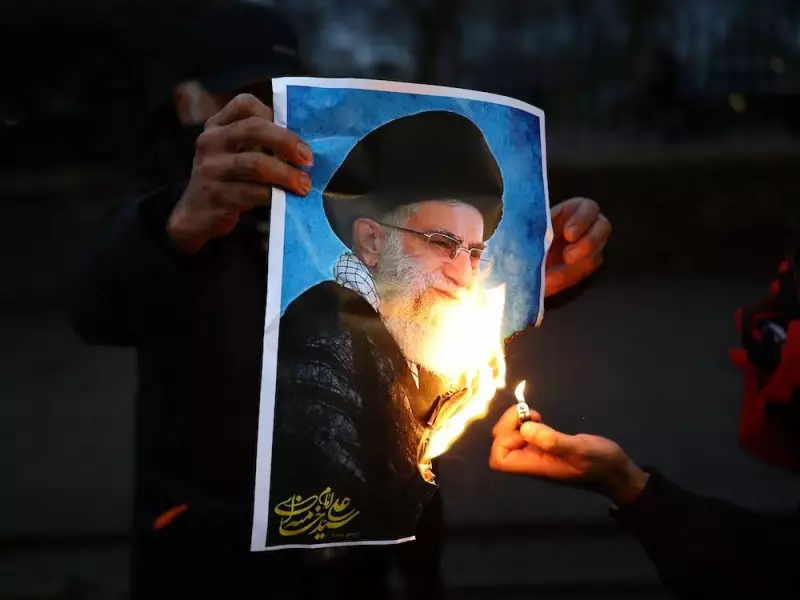
The convergence of these three forces—economic ruin, heightened international pressure, and a coalescing opposition—paints a picture of a regime that has rotted from within. The protests captured in London on January 12, 2026, where images of Khamenei were burned, are a symptom of this deeper decay. While the outcome remains uncertain, the analysis concludes that the foundational pillars of the Islamic Republic are shaking in a way they never have before.