In a move that has drawn immediate criticism and mockery, White House Press Secretary Karoline Leavitt has announced the launch of a 'Media Offender of the Week' section on the official White House website. The initiative, designed to call out media outlets for what the administration deems 'fake news,' has been widely criticized as a revival of one of former President Donald Trump's most contentious rhetorical tactics.
A Blast from the Past: 'Fake News' Returns
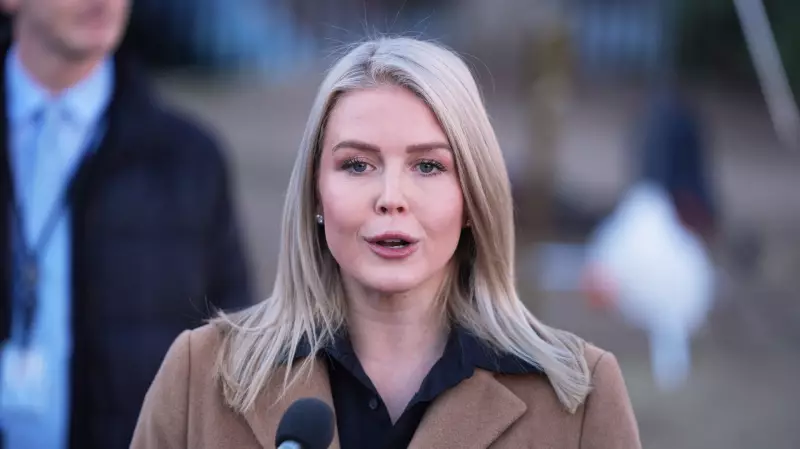
On Monday, December 1, 2025, Leavitt took to social media to unveil the new platform feature. The announcement directly invoked the term 'fake news,' a phrase famously and frequently used by Trump during his first term to discredit reporting he disliked, regardless of its accuracy. The press secretary's post included a link to the new section on the White House website, framing it as a tool to hold the media accountable.
The situation escalated quickly when Leavitt, speaking to reporters, lamented the volume of 'the fake news that we see pumped out of this building on a day to day basis.' This comment, made within the walls of the White House itself, struck many observers as deeply ironic, given the former president's and current administration's documented history of making false or misleading statements.

Social Media Erupts with Mockery and Criticism
The reaction on platforms like X (formerly Twitter) was swift and sardonic. Critics were quick to pounce on the perceived lack of self-awareness. One user sarcastically congratulated the administration for 'reinventing North Korea’s homepage with worse graphic design,' while another pointed out the irony of Leavitt sharing a Fox News link while decrying 'fake news,' comparing it to 'fighting fire by throwing gasoline.'
Many commentators framed the tactic as authoritarian. 'This is the exact type of tactic used by authoritarian governments when they want to discredit and control the press,' one user noted. Others treated the potential designation as a 'Badge of Honor,' suggesting that being criticized by this administration was a mark of credible journalism.
A Pattern of Unintentional Truth-Telling
Leavitt's gaffe is seen by some as part of a broader pattern among Republican figures making unintentionally revealing statements. The article references two other recent examples:
- In September, Senator Ted Cruz rhetorically asked a committee, 'How about we all come together and say, 'Let's stop attacking pedophiles.''
- In October, House Speaker Mike Johnson, while declaring his party was anti-Nazi, misspoke by saying, 'We defended that evil ideology.'
These incidents, combined with the launch of the 'Media Offender' list, have fueled debates about political communication, press freedom, and the use of state resources to target perceived enemies. The December 1, 2025 announcement has ensured that the term 'fake news' remains a potent and divisive part of the American political lexicon, while highlighting the ongoing tensions between the current administration and the mainstream press.