White House Press Secretary's 'However' Remark Ignites Constitutional Firestorm
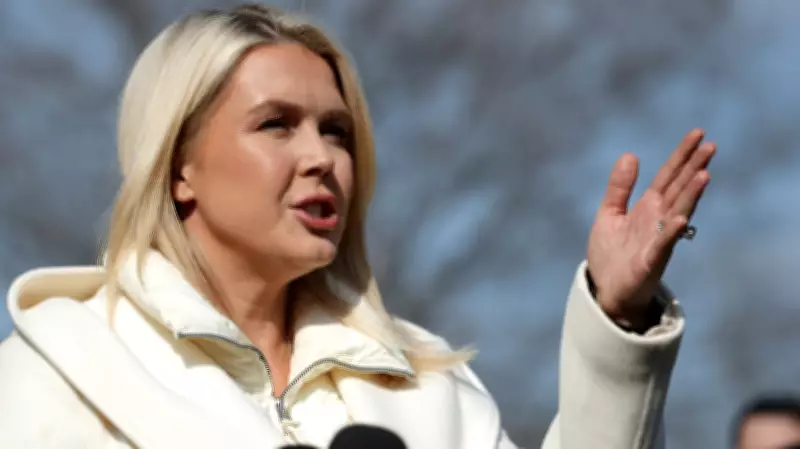
White House press secretary Karoline Leavitt found herself at the center of a political maelstrom on Tuesday after her use of a single transitional word raised significant eyebrows and sparked widespread concerns about constitutional fidelity. The controversy emerged during a press briefing where Leavitt was responding to questions about President Donald Trump's recent call for Republicans to nationalize voting procedures across the United States.
The Question That Started It All
A reporter specifically asked Leavitt to clarify whether President Trump believes elections should remain under state control as traditionally established or whether he supports federal intervention. This question came amid growing political debate about election administration and voting rights across the nation.
Leavitt's initial response seemed straightforward: "The president believes in the United States Constitution." However, it was her immediate follow-up that triggered the controversy. She continued: "However, he believes there has obviously been a lot of fraud and irregularities that have taken place in American elections, and again, voter ID is a highly popular and common-sense policy that the president wants to pursue, and he wants to pass legislation to make that happen for all states across the country."

Social Media Erupts Over Constitutional Concerns
The strategic placement of the word "however" immediately following her constitutional affirmation sparked immediate concern across social media platforms. Critics argued that this linguistic choice suggested conditional support for the nation's founding document rather than absolute fidelity.
Representative Jim McGovern shared the exchange on social media with the caption highlighting the concerning nature of the "however" transition. Multiple commentators expressed alarm at what they perceived as a qualification of constitutional belief.
Key criticisms that emerged included:
- The Constitution should be viewed as immutable unless amended through proper legal channels
- True belief in constitutional principles requires no qualifying statements
- The word "however" inherently undermines the preceding affirmation
- Constitutional fidelity should be absolute rather than conditional
Broader Implications for Election Policy Debate
This linguistic controversy occurs against the backdrop of ongoing national discussions about election integrity, voter identification requirements, and the balance between state and federal control over voting procedures. The White House's position on these matters has become increasingly significant as election-related legislation moves through various state and federal bodies.
The incident highlights how seemingly minor rhetorical choices can carry substantial political weight, particularly when discussing foundational documents like the United States Constitution. As the debate continues, both supporters and critics of the administration will likely scrutinize future statements for similar linguistic patterns that might reveal underlying policy positions or constitutional interpretations.
This episode serves as a reminder of how carefully crafted political messaging can sometimes reveal more than intended, especially when discussing matters as fundamental as constitutional governance and democratic processes.