White House Faces Intense Criticism for Blending Call of Duty Gameplay with Real Iran Strike Footage
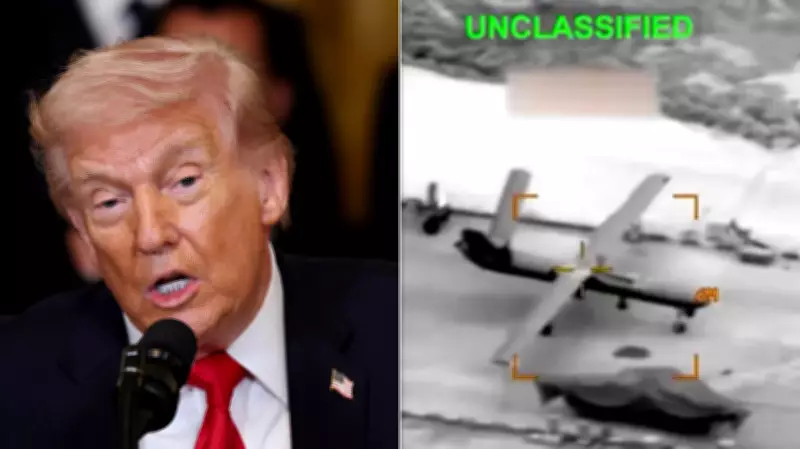
The White House is confronting significant public backlash after its official social media account posted a controversial video compilation that interweaves clips from the popular video game series Call of Duty with authentic footage of recent missile strikes targeting Iran. This provocative post emerged merely days after the United States, in collaboration with Israel, initiated armed hostilities against the Middle Eastern nation, marking a severe escalation in regional tensions.
Video Content and Immediate Public Outrage
The video, which was uploaded on Wednesday, opens with a distinctive killstreak animation from Call of Duty before transitioning to real military strike imagery against Iranian targets. In the gaming context, a killstreak represents a reward mechanism where players achieve a sequence of kills without dying, unlocking powerful in-game abilities. The specific animation selected by the White House depicts a player activating a massive missile strike to eliminate the opposing team after reaching a certain kill threshold.
The compilation was captioned succinctly: "Courtesy of the Red, White & Blue." Since its publication, the clip has garnered nearly 50 million views, igniting a firestorm of criticism across social media platforms. Users expressed profound dismay, with one individual remarking, "What in the fuck is wrong with you people? Americans don't wanna see you treat war like call of duty. Who the fuck is running this account."

Another commenter stated, "[Not gonna lie] it's pretty disgusting for the WH to gamify war and killing like this," while a third added, "Actually terrifying that this is our government." In response to the growing controversy, HuffPost has contacted both the White House and Activision, the developer of Call of Duty, seeking official comments.
Background of the U.S.-Iran Conflict and Retaliatory Actions
The White House's contentious post follows last week's coordinated attacks by the United States and Israel on Iran, which resulted in the death of Iran's Supreme Leader, Ayatollah Ali Khamenei. Iran has retaliated aggressively, launching assaults on Israel and U.S. military bases throughout the region. The conflict has led to devastating human casualties, with reports indicating over 1,000 fatalities, including children, and more than 5,400 civilians injured.
Additionally, six U.S. service members have been identified as killed in Iranian counterattacks. Iran has issued stern warnings, asserting that the United States will "bitterly regret" torpedoing an Iranian warship. Former President Donald Trump commented on the situation via a Truth Social post on February 28, stating, "Khamenei, one of the most evil people in History, is dead. This is not only Justice for the people of Iran, but for all Great Americans, and those people from many Countries throughout the World, that have been killed or mutilated by Khamenei and his gang of bloodthirsty THUGS."
He further elaborated, "There was not a thing [Khamenei], or the other leaders that have been killed along with him, could do." In the same post, Trump cryptically warned that "the heavy and pinpoint bombing" would persist "as long as necessary to achieve our objective of PEACE THROUGHOUT THE MIDDLE EAST AND, INDEED, THE WORLD!"
Historical Context of Government Use of Video Game Imagery
This incident is not an isolated occurrence; the White House has previously utilized imagery from popular video games such as "Pokemon" and "Halo" in promotional videos aimed at supporting Immigration and Customs Enforcement officers' propaganda efforts in recent months. Following widespread backlash from those earlier campaigns, a Department of Homeland Security spokesperson defended the strategy in a public statement.

The spokesperson explained, "We will reach people where they are with content they can relate to and understand, whether that be Halo, Pokémon, Lord of The Rings, or any other medium." This approach underscores a broader governmental tactic to engage with younger demographics through familiar cultural references, though it continues to spark debate over the appropriateness of blending entertainment media with serious geopolitical and military matters.