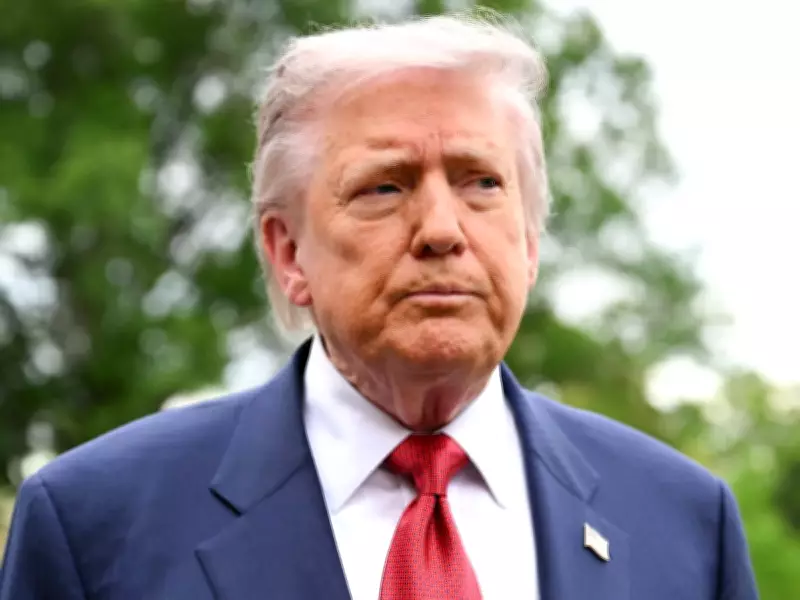
In a move described as a tantrum, U.S. President Donald Trump last week threatened to impose 25 per cent tariffs on European cars and trucks entering the United States, up from the 15 per cent agreed to last year. The announcement sparked outrage from European leaders who thought they had a deal, and it is poised to hurt American consumers, who are running up auto loan debt on increasingly expensive vehicles and may lose access to the few remaining affordable models if manufacturers pull them from the market. Trump's tariffs are also, perversely, creating opportunities for Chinese automakers who are moving into Canada to fill the space created by exiting U.S. carmakers.
Background on the Tariff Threat
Claiming that the European Union is not complying with a fully agreed trade deal, President Trump announced last Friday that he would increase tariffs charged to the EU for cars and trucks coming into the United States to 25 per cent. This threat upset the deal agreed to last July, which set tariffs on autos and auto parts from the EU at 15 per cent. European Commission President Ursula von der Leyen pointed to that breach, commenting that a deal is a deal and that the EU is prepared for every scenario, implying a readiness to fight the change.
Impact on American Consumers
The prospect of a renewed and escalated trade war between European nations and the U.S. is grim for American consumers. Even before Trump's 25 per cent tariff brainstorm, auto manufacturers found American trade barriers hard to navigate, as they raise the price not just of cars but of parts imported for inclusion in U.S.-assembled vehicles. According to reports, foreign-based automakers have warned the Trump administration that they are looking at pulling their cheapest car models out of the U.S. market if the USMCA is not renewed or is watered down.

What few small, cheap cars are offered to American buyers come from Asia-based manufacturers like Nissan, Hyundai, and Toyota, since American companies have shifted to expensive models, SUVs, and trucks. Profit margins are thin on affordable vehicles and are made thinner if manufacturers must pay duties on imported components.
The USMCA Factor
The United States-Mexico-Canada Agreement (USMCA) negotiated by Trump during his first term exempts parts made in Canada and Mexico from tariffs, and automakers have largely treated North America as a single market. But now Trump says he wants to renegotiate his own USMCA, leaving carmakers with plants scattered across the three countries feeling much like European officials in dealing with a U.S. president who unpredictably tears up his own deals. The Trump administration now says it wants manufacturers to move all their plants to the U.S., but that is an expensive and unlikely move.
Automakers may simply stop offering more affordable or less profitable vehicle models because of the cost of meeting the rules, as noted by Rory Heslington, vice president of Autos Drive America, a trade group for foreign automakers in the U.S., in testimony to the Office of the U.S. Trade Representative.