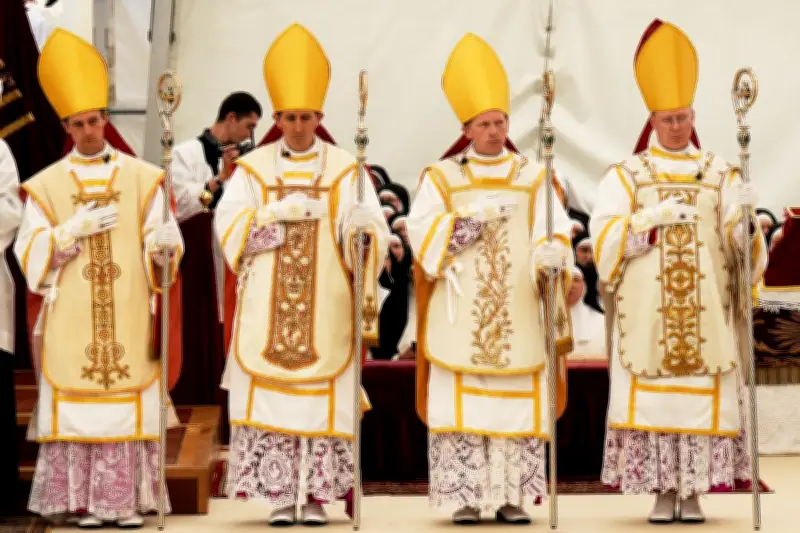
The Vatican has officially declared the Society of St. Pius X (SSPX) to be in a state of schism, excommunicating its bishops and invalidating all sacraments performed by the group. The decision, announced by Pope Leo XIV, represents a definitive rupture with the traditionalist Catholic organization that has long resisted the reforms of the Second Vatican Council.
Background of the Conflict
The SSPX was founded in 1970 by Archbishop Marcel Lefebvre, who opposed the liturgical and doctrinal changes introduced by the Second Vatican Council (1962-1965). Tensions escalated in 1988 when Lefebvre consecrated four bishops without papal approval, leading to automatic excommunication under Pope John Paul II. Subsequent attempts at reconciliation under Pope Benedict XVI and Pope Francis failed to resolve fundamental disagreements over the council's teachings, particularly on religious liberty, ecumenism, and the liturgy.
Details of the Vatican's Action
According to a Vatican statement released July 1, 2026, the Holy See has determined that the SSPX's rejection of the Second Vatican Council and its refusal to recognize the authority of the Pope constitutes formal schism. The decree excommunicates all SSPX bishops and declares that any sacraments administered by the society, including confessions and marriages, are invalid under canon law. The Vatican emphasized that the measure was taken after years of dialogue failed to bring the group back into full communion.

"The Society of St. Pius X has persistently and publicly rejected the legitimate authority of the Roman Pontiff and the teachings of the Second Vatican Council, which are binding on all Catholics," the statement read. "This action is taken with regret but with the hope that the faithful will return to the unity of the Church."
Impact on the Faithful
An estimated 600,000 Catholics worldwide attend SSPX chapels, with significant communities in France, the United States, and Canada. The Vatican's ruling means that those who knowingly participate in SSPX sacraments may be considered to have separated themselves from the Church. However, the Vatican indicated that individual members who are not aware of the schism or who act in good faith may not face automatic excommunication.
"This is a devastating blow for traditionalist Catholics who have felt abandoned by the mainstream Church," said Dr. Elena Rossi, a professor of religious studies at the University of Bologna. "Many will now have to choose between their loyalty to the SSPX and their desire to remain in communion with Rome."
Reactions from the SSPX
Bishop Bernard Fellay, the superior general of the SSPX, rejected the Vatican's declaration, calling it "an unjust and invalid act" in a statement released from the society's headquarters in Menzingen, Switzerland. He accused the Vatican of abandoning Catholic tradition and persecuting those who seek to preserve it. "We will continue to offer the traditional sacraments to the faithful who desire them," he said. "No human decree can sever our communion with the Church of all ages."
Broader Implications
The move is likely to deepen divisions within the Catholic Church, which has seen a resurgence of traditionalist movements in recent years. Some observers worry that the excommunication could push more conservative Catholics toward sedevacantist groups, which hold that the papacy has been vacant since the Second Vatican Council. Others argue that the Vatican's firm stance may ultimately strengthen unity by clarifying the boundaries of acceptable dissent.
Pope Leo XIV, who succeeded Pope Francis in 2025, has taken a more assertive approach to doctrinal orthodoxy than his predecessor. In his first encyclical, he called for a "renewed fidelity to the Council" and warned against selective adherence to Church teaching.