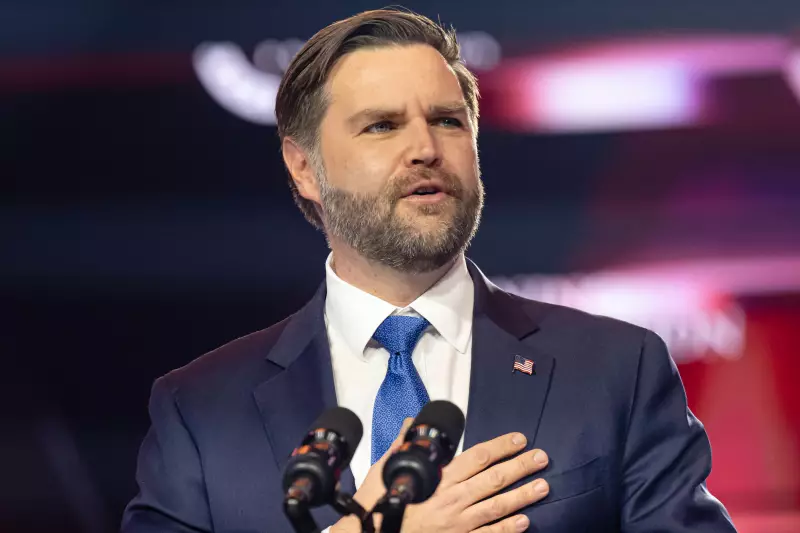
Vice President JD Vance sparked debate on Sunday, December 21, 2025, by explicitly refusing to establish clear boundaries against bigotry during a major conservative gathering. The incident occurred during his address at Turning Point USA's AmericaFest in Phoenix, Arizona, underscoring a visible feud within the movement's ranks.
A Defining Moment at AmericaFest
Speaking to a packed audience at the high-profile conservative conference, Vance was confronted with questions about the limits of acceptable discourse within the political right. In a significant moment, the Vice President declined to set what he termed "red lines" regarding prejudiced rhetoric or behaviour. His stance arrives at a time when the conservative coalition, both in the United States and observed by political watchers in Canada, is publicly grappling with internal divisions over ideology and inclusion.
The Context of Conservative Division
The AmericaFest event, a cornerstone for conservative youth activism, has itself been a flashpoint for controversy. The refusal by a figure as prominent as JD Vance to condemn bigotry in unambiguous terms highlights a strategic and philosophical rift. Some factions advocate for a more disciplined and broadly palatable message, while others, including elements within Turning Point USA, resist what they see as concessions to political correctness. Vance's comments are seen as aligning with this latter, more combative approach.

This internal conflict is not occurring in a vacuum. It reflects broader tensions being monitored by political analysts and policymakers in Canada, where the dynamics of neighbouring American politics often influence domestic discourse and alliance-building.
Analysis and Political Repercussions
Vance's position carries considerable weight given his role as Vice President and his influence as a leading voice for a populist strand of conservatism. By not establishing firm limits, he effectively leaves the definition of acceptable speech open to interpretation within the movement. Critics argue this ambiguity can embolden extremist elements and alienate moderate voters, potentially impacting the coalition's long-term viability.
Proponents, however, may view it as a rejection of what they consider enforced ideological conformity. The event and Vance's remarks are likely to fuel ongoing debates about the future direction of conservative politics in North America, with observers in Canada noting the potential cross-border implications for political rhetoric and coalition management.
The speech in Phoenix, captured by Associated Press photographer Jon Cherry, marks another chapter in the evolving and often turbulent narrative of the contemporary American right, a development of keen interest to those following federal and provincial politics in Canada.