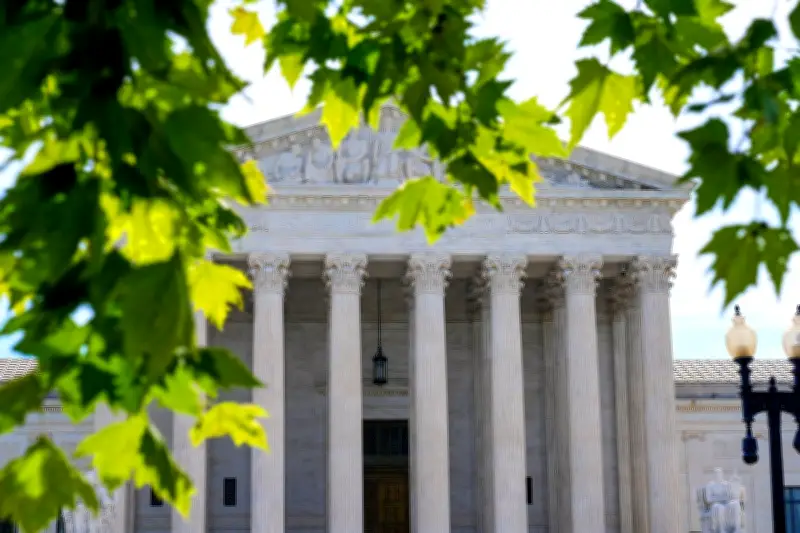
The U.S. Supreme Court on Thursday blocked thousands of lawsuits against the maker of Roundup weedkiller, ruling that federal law preempts state failure-to-warn claims regarding the product's cancer risks. The 6-3 decision delivers a major victory for Bayer AG, which has faced tens of thousands of cases alleging its glyphosate-based herbicide causes non-Hodgkin lymphoma.
Key ruling on preemption
Writing for the majority, Justice Clarence Thomas said that the Federal Insecticide, Fungicide, and Rodenticide Act (FIFRA) prevents states from imposing additional labeling requirements beyond those mandated by the Environmental Protection Agency (EPA). The court found that EPA's approval of Roundup's label, which does not include a cancer warning, supersedes any state law claims that such a warning is required.
“The EPA’s determination that Roundup’s label is adequate under FIFRA preempts any state law tort claim seeking to impose a different or additional warning,” Thomas wrote. The ruling effectively ends the vast majority of pending lawsuits against Bayer, which had already set aside $16 billion to resolve past claims.

Impact on pending cases
The decision applies to approximately 4,000 federal cases and thousands more in state courts, though some claims based on design defect or other theories may survive. Bayer shares rose more than 8% on the news. The company said it will continue to defend Roundup's safety, citing decades of studies and EPA findings that glyphosate is not carcinogenic.
“Today’s ruling confirms that Bayer has acted responsibly and that the EPA’s rigorous approval process should not be second-guessed by state juries,” said Bayer CEO Bill Anderson in a statement. The company noted that it would continue to sell Roundup without a cancer warning.
Dissent and criticism
Justice Elena Kagan, joined by Justices Sonia Sotomayor and Ketanji Brown Jackson, dissented, arguing that FIFRA does not bar state tort claims. “The majority’s decision strips states of their traditional power to protect citizens from harmful products,” Kagan wrote. “Nothing in FIFRA suggests Congress intended to shield manufacturers from accountability for failing to warn of known dangers.”
Plaintiffs' attorneys vowed to challenge the ruling and pursue alternative legal avenues. “This is a setback, but not the end,” said attorney Jennifer Moore, who represents hundreds of Roundup users. “We will continue to fight for justice for cancer victims and their families.”
Broader implications
The decision is expected to influence other product liability cases involving federally regulated labels, such as pharmaceuticals and pesticides. Legal experts say it could curb state-level consumer protection claims against a wide range of products. The case is Bayer v. Hardeman, No. 24-456.