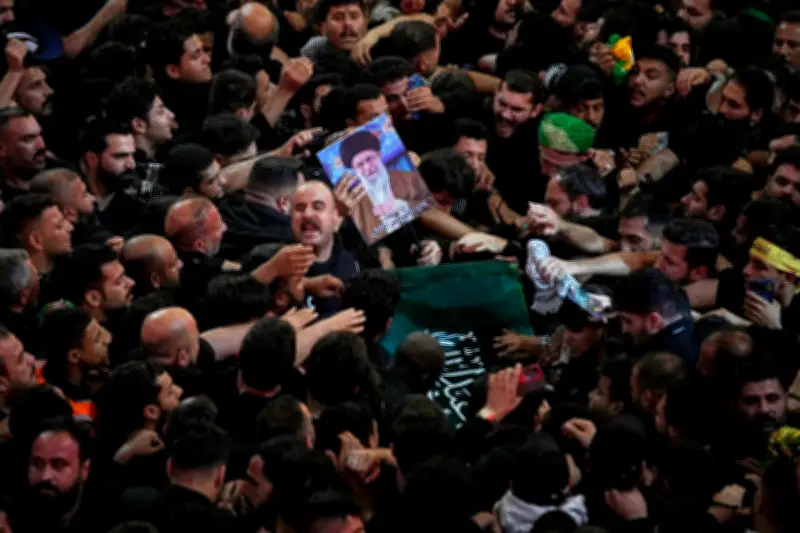
The United States launched new airstrikes on Iranian targets, breaking a fragile ceasefire and prompting Tehran to retaliate by targeting Gulf states, according to reports from the Associated Press. The attacks mark a significant escalation in the long-running Mideast conflict, with both sides resuming hostilities after a brief pause.
Details of the U.S. Strikes
The U.S. military conducted airstrikes on multiple Iranian positions, citing violations of the previous ceasefire agreement. President Donald Trump stated, "For me, I think it's over ... it's just a waste of time dealing with them," indicating frustration with Iran's compliance. He added that the U.S. would "finish the job" in Iran, signaling a commitment to decisive action.
The strikes targeted military infrastructure and strategic sites, though specific locations and casualties have not been disclosed. The action came after weeks of rising tensions, including attacks on tanker and merchant ships in the Gulf, which analysts described as a return to Cold War-style confrontations.

Iran's Retaliation Against Gulf States
In response, Iran launched attacks on Gulf states, including Saudi Arabia and the United Arab Emirates, using missiles and drones. The attacks targeted oil facilities and shipping lanes, threatening global energy supplies. Iranian officials justified the retaliation as a defensive measure against U.S. aggression.
Canadian Prime Minister Mark Carney condemned the escalation, stating, "That’s irresponsible, that’s not right," and urged de-escalation. Carney was visiting Saudi Arabia at the time, where he raised human rights concerns and sought to mediate the crisis.
Impact on the Region and Global Markets
The renewed conflict has disrupted oil markets, with crude prices spiking by over 5% following the attacks. Shipping in the Gulf has been severely affected, with major carriers rerouting vessels to avoid danger zones. The International Maritime Organization reported a 30% increase in insurance premiums for vessels transiting the region.
Analysts warn that the conflict could draw in other regional powers, further destabilizing the Middle East. "We're back to the Cold War," said one analyst, referring to the proxy-style attacks on commercial shipping. The ceasefire, which had held for only two weeks, collapsed after mutual accusations of violations.
International Response and Diplomatic Efforts
The United Nations Security Council held an emergency session but failed to reach a consensus on a resolution. Russia and China called for restraint, while the U.S. defended its actions as self-defense. European allies expressed concern and urged both sides to return to negotiations.
Canada, which had recently strengthened ties with Saudi Arabia, offered to mediate. Prime Minister Carney's visit to the kingdom was described as a "high-water mark" for bilateral relations, but the conflict has complicated diplomatic efforts.