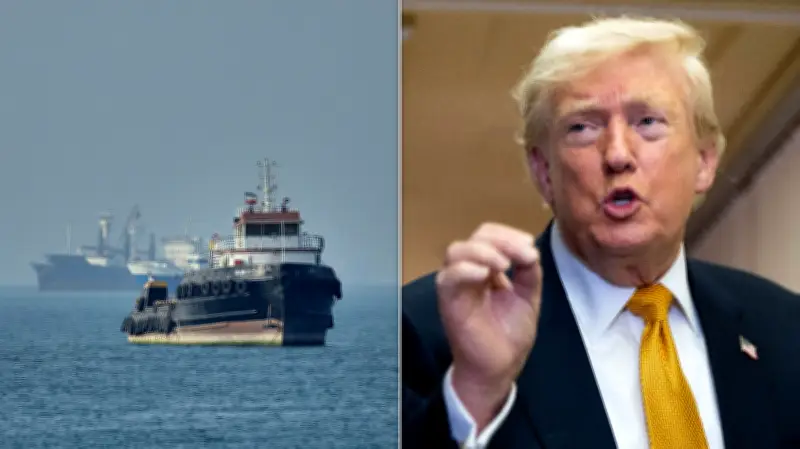
The United States launched strikes on Iran early Sunday morning in response to an Iranian attack on a vessel in the Strait of Hormuz, which set the container ship ablaze and forced its crew to abandon it. Iran retaliated with attacks targeting Bahrain, Qatar, and the United Arab Emirates, escalating the conflict that began on Feb. 28.
Strait of Hormuz Attack Details
A Cyprus-flagged container ship was hit by Iran, suffering "significant engineroom damage," and a civilian crew member is missing, according to U.S. Central Command. The United Kingdom Maritime Trade Operations center reported that the ship was traveling along a route hugging the shoreline of Oman, a common path to avoid Iranian territorial waters. The crew abandoned the vessel as it was ablaze.
Iran's paramilitary Revolutionary Guard claimed that multiple vessels "disregarded our warnings and instructions to correct their course and proceed along the approved route," and one "was struck by a warning shot and brought to a stop."

Iranian Retaliation Against Gulf States
The United Arab Emirates warned the public of an incoming missile and drone attack, with explosions heard in nearby Qatar. Qatar's military intercepted the incoming Iranian fire, while missile alerts sounded in Bahrain, home to the U.S. Navy's 5th Fleet. It was not immediately clear what locations in the UAE were targeted, as the country had not been hit in the latest round of attacks.
U.S. Defense Secretary Pete Hegseth wrote online: "Iran made a poor choice. Now they pay." Hegseth's statement echoed the administration's hardline stance.
Global Energy Implications
The Strait of Hormuz has become a key sticking point in negotiations between Iran and the United States to end the war that began on Feb. 28. Before the war, about a fifth of all traded oil and natural gas passed through the strait. Iran's grip on it during the war led to a global energy crisis, though oil prices have sharply dropped from wartime highs of $120 a barrel.
Iran announced the strait would remain closed "until further notice" and threatened to target "additional enemy bases in the region" if faced with more attacks.
Diplomatic Efforts and Leadership Statements
The violence followed a meeting between Iran and Oman's foreign ministers on Saturday to discuss the strait, after days of Iranian attacks on ships and U.S. retaliation that undermined the interim deal. Oman said both countries agreed to continue talks "at the technical and political levels," but Iran did not commit to keeping the strait open to all.
Iran's new supreme leader, Ayatollah Mojtaba Khamenei, issued his first statement since the war began, vowing revenge for the killing of his father, Ayatollah Ali Khamenei, in the war's opening strikes. "Such revenge is the will of our nation and must certainly be carried out," he said in a statement carried on state television.
U.S. and Iranian Military Actions
The U.S. attacks on Iran targeted Bandar Abbas and Sirik, as well as other areas along the shores of the strait, according to Iran state media. Iran offered no immediate information about casualties or damage. The crossfire comes after U.S. President Donald Trump suggested an interim deal in the Iran war was "over."