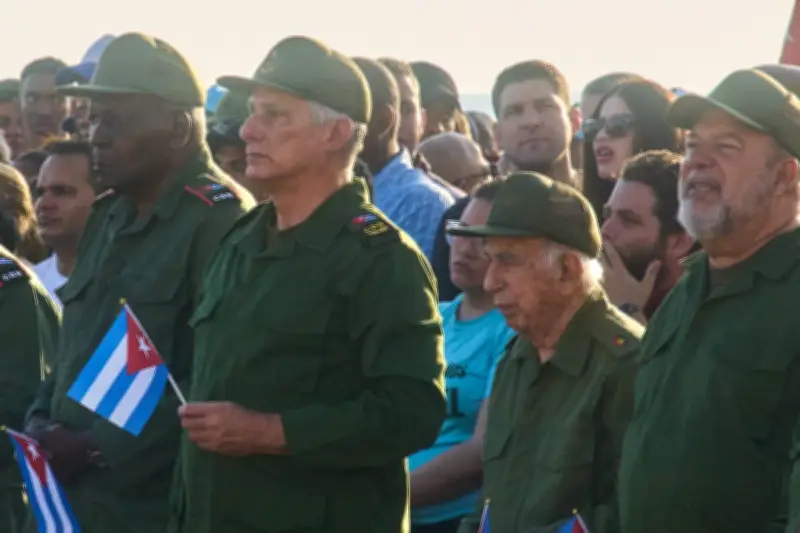
The United States has imposed sanctions on Cuba's President Miguel Diaz-Canel in its latest effort to pressure the island nation's leadership. The move, announced by the U.S. Treasury Department, targets Diaz-Canel for his role in suppressing dissent and undermining democratic processes in Cuba. This action follows a series of measures aimed at isolating the Cuban government economically and politically.
Details of the Sanctions
The sanctions freeze any assets Diaz-Canel may hold in U.S. jurisdictions and prohibit American citizens and companies from doing business with him. The U.S. government cited Diaz-Canel's involvement in human rights abuses and his support for the repressive policies of the Castro regime as justification for the sanctions. This is the first time a sitting Cuban president has been directly sanctioned by the United States.
Reaction from Cuba
The Cuban government condemned the sanctions, calling them an act of aggression and a violation of international law. In a statement, the Cuban Foreign Ministry accused the U.S. of attempting to destabilize the country and interfere in its internal affairs. Diaz-Canel himself dismissed the sanctions as ineffective, stating that they would not deter Cuba from pursuing its socialist path.

Broader Context
The sanctions come amid heightened tensions between the two nations. Earlier this year, U.S. prosecutors indicted former Cuban President Raul Castro for his alleged role in the 1996 shootdown of civilian planes operated by Miami-based exiles. The indictment has further strained relations, with Cuba denouncing it as politically motivated. The U.S. has also maintained a decades-long trade embargo against Cuba, which has been tightened under recent administrations.
Impact on U.S.-Cuba Relations
This latest move is likely to further complicate any prospects for diplomatic rapprochement. The Biden administration has signaled a tough stance on Cuba, prioritizing human rights and democratic reforms. Critics argue that sanctions primarily hurt the Cuban people rather than the leadership, while supporters say they are necessary to pressure the regime. The international community remains divided, with some allies supporting the U.S. position and others calling for dialogue instead of punitive measures.
As the situation develops, both nations appear entrenched in their positions, with no immediate signs of de-escalation. The sanctions on Diaz-Canel mark a significant escalation in U.S. policy toward Cuba, underscoring the administration's commitment to holding Cuban leaders accountable for alleged abuses.