The United States House of Representatives has approved a war powers resolution designed to halt military action against Iran, marking a significant move by Congress to assert its authority over foreign military engagements. The resolution, which passed with bipartisan support, directs the President to cease hostilities unless authorized by Congress or in cases of imminent national security threats.
Political Context and Reactions
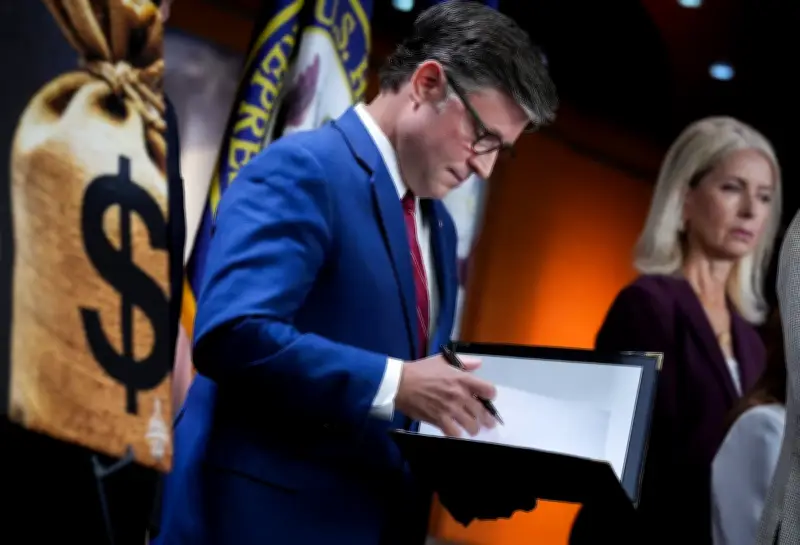
Speaker of the House Mike Johnson, a Republican from Louisiana, addressed reporters at the Capitol in Washington on Wednesday, June 3, 2026, alongside other GOP leaders. The resolution reflects growing unease among lawmakers about the scope of executive power in military matters. Proponents argue that it reinforces constitutional checks and balances, while critics contend it could undermine the President's ability to respond swiftly to threats.
Background of US-Iran Tensions
The resolution comes amid heightened tensions between the United States and Iran, particularly over Iran's nuclear program and regional activities. The Trump administration had previously conducted airstrikes against Iranian-backed forces, prompting calls for congressional oversight. The House vote is seen as a rebuke to the administration's approach, emphasizing the need for legislative approval before engaging in prolonged military campaigns.

Impact and Next Steps
The resolution now moves to the Senate, where its fate remains uncertain. If passed, it would require the President to withdraw US forces from hostilities against Iran within 30 days, unless Congress declares war or authorizes military action. The White House has signaled opposition, citing national security concerns. The vote highlights the ongoing debate over war powers and the balance between executive and legislative branches in foreign policy.
Observers note that the resolution may not immediately alter US military posture but could set a precedent for future engagements. Lawmakers from both parties have expressed concerns about the potential for escalation in the Middle East, urging diplomatic solutions. The development is closely watched by allies and adversaries alike, as it signals potential shifts in US foreign policy approach.