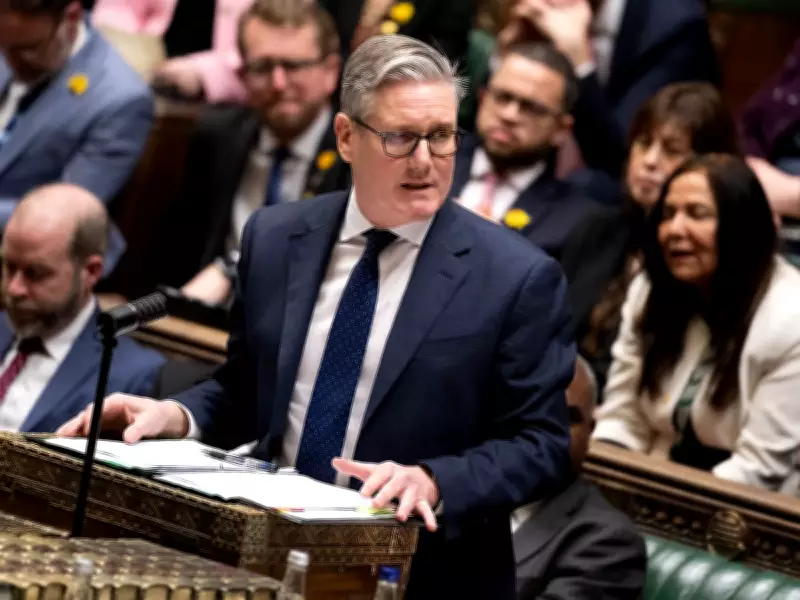
UK Prime Minister Confronts Significant Internal Rebellion Over Immigration Policy Changes
Prime Minister Keir Starmer's government is facing a substantial internal challenge as more than 100 Labour Party lawmakers have privately urged a reconsideration of proposed changes to the United Kingdom's immigration system. This development highlights the considerable opposition emerging from within the Prime Minister's own political ranks, threatening to create another difficult internal confrontation for the administration.
Private Letter Signals Widespread Dissent
The members of Parliament sent a confidential letter to Home Secretary Shabana Mahmood on Wednesday afternoon, according to documents viewed by Bloomberg. This communication preceded a planned speech by Mahmood intended to persuade her colleagues that the controversial reforms should proceed despite growing concerns.
The proposed changes would create a more restrictive pathway for many lower-income migrants seeking residency and citizenship, while simultaneously easing requirements for those with high-paying employment positions. This dual approach has generated significant controversy within the Labour Party's parliamentary membership.

Home Secretary's Defense of Border Control Measures
At an event hosted by the Institute for Public Policy and Research, Home Secretary Mahmood planned to deliver remarks emphasizing that "restoring order and control at our border is not a betrayal of Labour values, it is an embodiment of them." This statement represents her attempt to frame the immigration reforms as consistent with the party's principles rather than contradictory to them.
Mahmood, whose parents immigrated from Pakistan, assumed the home secretary position in September with a commitment to strengthen the nation's border controls. Her appointment followed months during which Labour faced political pressure from the anti-immigration Reform UK party in opinion polls.
Scale of Opposition and Historical Context
The private letter signed by approximately one-quarter of the Parliamentary Labour Party indicates that a substantial bloc of lawmakers is unlikely to support the proposed reforms. This sets the stage for what could become another challenging internal rebellion for Starmer's government.
The immigration debate occurs against a backdrop of significant demographic changes in recent years. Net migration to the UK surged to more than 900,000 following the coronavirus pandemic, as former Prime Minister Boris Johnson relaxed work restrictions to address labor market vacancies. These increased numbers generated concerns about pressure on public services including housing and education, occasionally resulting in protests that turned violent.
Specific Policy Changes Generating Controversy
Among the most contentious proposals is a plan to double the baseline period migrants must reside in the country before claiming residency, extending it from five years to ten. Meanwhile, visa-holders earning more than £125,000 (approximately US$167,110) would become eligible to apply for indefinite leave to remain after just three years, granting them access to broader welfare benefits and unrestricted work authorization.
Conversely, low-paid care workers admitted through Health and Care visas—a program expanded after the pandemic in 2022—would face a minimum fifteen-year wait before applying for indefinite leave to remain. These changes would apply retroactively to individuals already in the country, potentially adding years to residency timelines for migrants who were weeks away from achieving permanent status.
Broader Political Implications
The private nature of Wednesday's letter is particularly concerning for the government because it attracted signatures from more centrist MPs who typically align with administration positions. This suggests broader discontent than indicated by a separate public letter sent to Mahmood last month and signed by over thirty Labour lawmakers primarily associated with the party's left wing, which characterized the policy revisions as "deeply unfair."

Although restrictions implemented during the latter years of the Conservative government helped reduce net migration to 204,000 in the twelve months through June, Mahmood aims to implement further reductions. She is also focused on deterring undocumented migrants arriving via dangerous small boat crossings of the English Channel, numbers that have remained persistently elevated despite previous efforts.
The emerging rebellion represents a significant test for Starmer's leadership and his government's ability to implement controversial policy changes while maintaining party unity. With approximately one-quarter of Labour's parliamentary members expressing opposition through private channels, the Prime Minister faces the delicate task of balancing border control objectives with maintaining internal political cohesion.