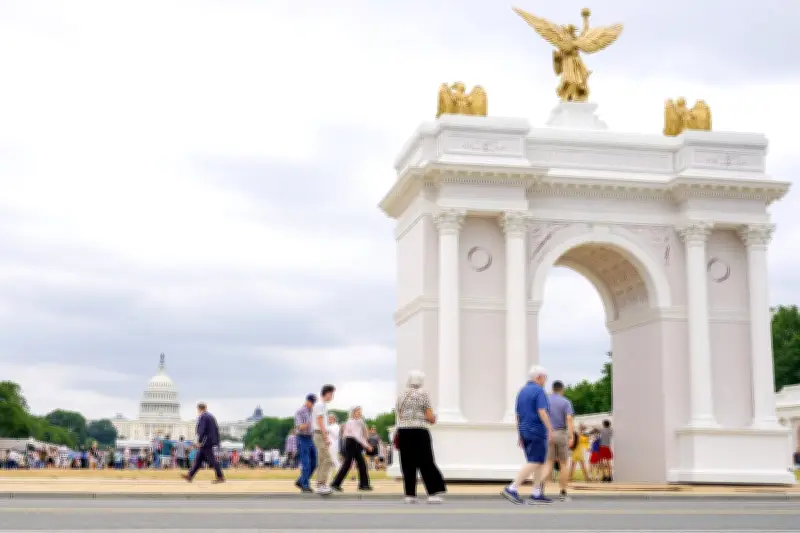
President Donald Trump's plan to build a triumphal arch in the nation's capital is undergoing another review, according to officials familiar with the process. The proposed monument, intended to commemorate American achievements, has sparked debate over its design, location, and cost.
Background of the Proposal
The idea for a triumphal arch was first floated by Trump in 2020, inspired by classical structures like the Arc de Triomphe in Paris. The proposed arch would be located near the National Mall, potentially on the grounds of the Washington Monument or along Pennsylvania Avenue. Initial estimates placed the cost at $200 million, but updated figures have not been released.
Critics argue that the project is an unnecessary expenditure of taxpayer money and that it would disrupt the existing landscape of memorials. Supporters, however, say it would be a fitting tribute to American values and history.

Review Process
The National Capital Planning Commission (NCPC) and the Commission of Fine Arts (CFA) are leading the current review. Both agencies must approve the design and location before construction can begin. A spokesperson for the NCPC said, "We are committed to a thorough and transparent review process that considers all aspects of the proposal."
The review will include public hearings and environmental impact assessments. The timeline for a decision has not been announced, but officials expect it to take several months.
Historical Context
The proposal comes as the United States prepares to celebrate the 250th anniversary of the Declaration of Independence in 2026. Some have suggested that the arch could serve as a centerpiece for the celebration. However, historians point out that triumphal arches are typically built to celebrate military victories, and the U.S. has few such structures. The only major triumphal arch in Washington is the Washington Square Arch in New York City, which is not a federal monument.
According to Graham Dodds, a professor at Concordia University, the Founding Fathers had a vision for the U.S. that emphasized liberty and democracy, not grand monuments. "The Declaration of Independence was a radical document that rejected monarchy and aristocracy," Dodds said. "Building a triumphal arch might seem out of step with that vision."
Impact and Funding
The project has drawn mixed reactions from the public and lawmakers. Some members of Congress have proposed using private donations to fund the arch, similar to the Washington Monument, which was built with private funds. Others insist that taxpayer money should not be used for such a project.
If approved, the arch would be the first major monument built on the National Mall since the Martin Luther King Jr. Memorial in 2011. The National Park Service, which manages the Mall, has expressed concerns about overcrowding and maintenance costs.
Next Steps
The NCPC and CFA will hold a joint meeting next month to discuss preliminary designs. Public comments will be accepted online and during hearings. A final decision is expected by early 2027.