Trump's Iran War Emerges as Political Liability for Republicans
President Donald Trump's military engagement in Iran is increasingly viewed as a significant political misstep for the Republican Party, providing Democrats with potent ammunition to argue that the GOP is out of touch with the economic struggles of everyday Americans. The White House had anticipated that Trump's Wednesday night address, which sought to justify the conflict, might stem the decline in his approval ratings. However, it was his earlier remarks at an Easter luncheon that have drawn sharp criticism and could define the political narrative moving forward.
Controversial Comments on Social Priorities
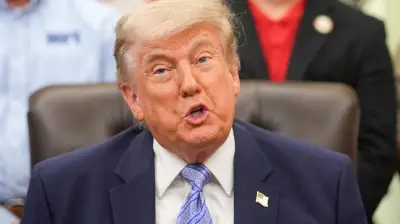
At the closed-door event, footage of which has since been removed from the White House website, Trump stated, "We're fighting wars. We can't take care of day care." He elaborated, "It's not possible for us to take care of day care, Medicaid, Medicare, all these individual things. They can do it on a state basis. We have to take care of one thing: military protection." These comments, which prioritize military action over domestic social programs, are seen by Democrats as a gift for attack ads, especially as many Americans perceive the Iran war as unnecessary.
This stance is further reinforced by the upcoming release of a White House budget that proposes substantial increases in defense spending while cutting social safety net programs. Some congressional Republicans have even discussed funding the Iran conflict through reductions in social services, a move that critics argue exacerbates the political fallout. Former Representative Reid Ribble, a Republican from Wisconsin who served from 2011 to 2017 and was an early critic of Trump, warned, "This is really, really bad for the midterms for Republicans."

Economic Impact and Voter Concerns
Ribble, who holds traditional foreign policy views and supported military intervention in Iran with congressional approval, noted that the public is far more focused on economic issues. "This is going to impact pricing everywhere. And people already feel like they're stretched thin. They already feel like Washington isn't listening to them. They already feel like health care costs too much, and groceries cost too much, and now gas costs too much," he explained. The economic repercussions are already tangible, with AAA announcing on Thursday that the average cost of a gallon of gas has surpassed $4 for the first time in four years, marking the fastest increase in decades. Democrats have swiftly launched ads attributing this spike to Trump's policies.
Jared Bernstein, a senior fellow at the liberal Center for American Progress and former top economic advisor to President Joe Biden, highlighted the broader inflationary effects. "Food inflation was already elevated. Now we have higher diesel prices, with 80% of our food moved in trucks," Bernstein said during a Thursday conference call with reporters. "We're already seeing big food distributors adding surcharges... which then get passed on to the retailers and the consumer."
Political Repercussions and Democratic Advantage
Trump and his allies have argued that fuel prices will decrease once the Iran conflict subsides, with Trump suggesting in his speech that this could occur within two to three weeks. However, both market analysts and experts predict that prices will remain high for months, if not longer. A senior Democratic House aide drew parallels to past voter sentiments, recalling 2024 focus groups where participants expressed frustration over U.S. aid to Ukraine while struggling to pay rent. Trump and Republicans had previously criticized Biden's support for Ukraine as risky, but now face backlash for their own foreign policy stance.
The aide emphasized, "Republicans and Trump have managed not only to brand themselves with two of the most unpopular positions possible ― pro-foreign war and not doing shit to help people get by at home ― these two dynamics are completely reinforcing of one another." She added, "Every day, Republicans are making Democrats' arguments more credible, real and believable." This convergence of foreign policy and domestic neglect is shaping up to be a central issue in upcoming elections, with Democrats poised to capitalize on Republican vulnerabilities.