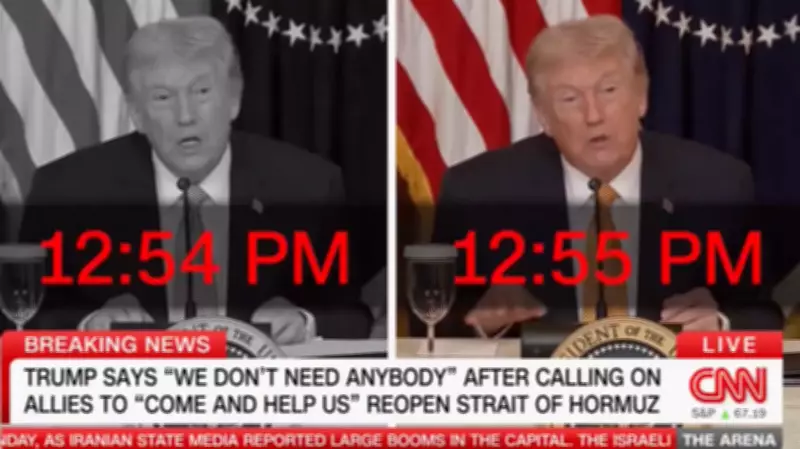
A revealing CNN segment aired by journalist Kasie Hunt on Monday showcased a montage of former President Donald Trump making a series of contradictory statements about the ongoing crisis in the Strait of Hormuz, a situation exacerbated by his administration's policies toward Iran. The compilation highlights Trump's rapidly shifting stance on whether the United States requires assistance from allied nations to secure the vital waterway.
Contradictory Demands in Minutes
Trump's call for traditionally allied countries to deploy warships to aid the U.S. Navy in safeguarding the narrow Strait of Hormuz—through which approximately one-fifth of the world's oil supply flows—has been met with, at best, a tepid response from international partners. The montage captures Trump seemingly grappling with this reality in real time, as his statements flip-flop within a span of just minutes.
Key Statements from the Montage
The clip, which aired on CNN, includes the following statements from Trump, presented in chronological order:

- 12:21 p.m.: "If we ever needed help, they won't be there for us. I've just known that for a long period of time."
- 12:53 p.m.: "We have some that are really enthusiastic. They're coming already."
- 12:54 p.m.: "This is a need, need would be one of the big boys."
- 12:55 p.m.: "If we need them in boats or if we need anything any piece of apparatus that they may have because of a situation that they have they should be jumping to help us."
- 12:19 p.m.: "We want them to come and help us with the Strait."
- 12:56 p.m.: "My attitude is, we don't need anybody. We're the strongest nation in the world. We have the strongest military by far in the world we don't need them."
Journalist's Reaction and Broader Context
Following the montage, Kasie Hunt posed a pointed question to viewers: "Did you follow that?" She then admitted, "We had a hard time following that," before providing crucial context to underscore the significance of these contradictions.
Hunt emphasized that the United States is now more than two weeks into the conflict, with oil and gas prices continuing to climb sharply. The national average for gasoline has reached $3.70 per gallon, marking an increase of over 75 cents compared to just one month ago. This surge in energy costs has placed immense pressure on the administration to find immediate solutions to increase oil flow and stabilize markets.
Implications of the Crisis
The Strait of Hormuz remains a critical chokepoint for global oil transportation, and the ongoing tensions have heightened economic anxieties worldwide. Trump's inconsistent messaging on allied support not only reflects internal confusion but also complicates diplomatic efforts to secure international cooperation. As prices rise, the administration's search for viable strategies to mitigate the crisis becomes increasingly urgent, highlighting the broader geopolitical and economic stakes involved.