Road Safety Advocates Push Ottawa to Strengthen Vision Zero Commitment
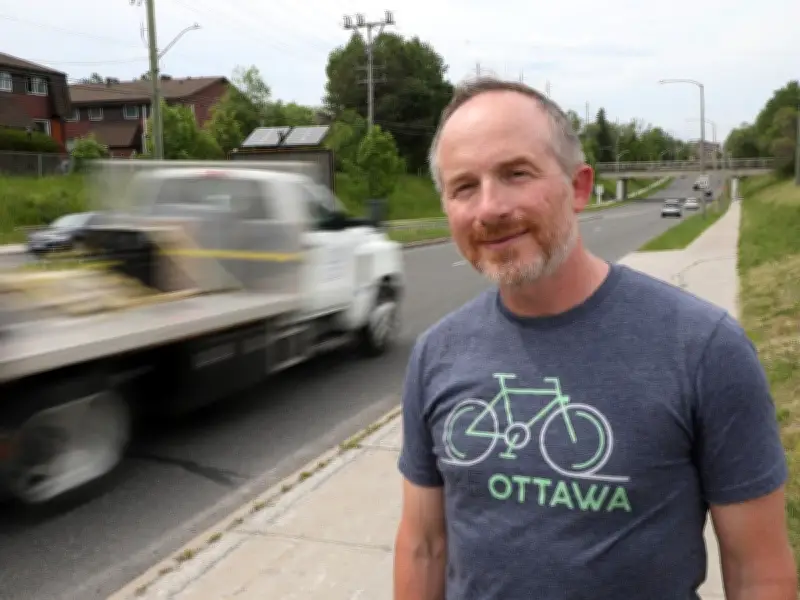
Parents and working professionals are urging municipal and provincial governments to implement traffic safety changes in Ottawa, arguing that the current road system prioritizes drivers over pedestrians. The call comes from Vision Zero Ottawa, a nonprofit formed six months ago by concerned citizens including Chris Hircock, a marine systems engineer and father.
Hircock’s daily commute involved walking his daughter to Broadview Public School in the Nepean High School complex in Westboro, then biking to a Department of National Defence building downtown. He described the area around the school as the most dangerous part of the trip, citing hurried parents, school-zone speeding, and unsafe U-turns. “All rational people otherwise doing very irrational things,” he said, adding that this inspired him to co-found Vision Zero Ottawa.
The organization is a mix of parents and professionals pushing for changes to an Ottawa road system they say inherently prioritizes drivers. “Our communities and our city are really not designed for children to move around safely or older kids to move around independently,” Hircock said in an interview.

What Is Vision Zero?
Vision Zero is a global movement that asks governments to “prioritize human life over driver convenience.” First introduced in 1995 by Sweden’s government and the Swedish Transport Administration, it asserts that no loss of life or serious injury on the roads is acceptable. The strategy advocates for better road design and policy at systemic and cultural levels. It has proven successful across Europe and is gaining momentum in major North American cities like Toronto.
Ottawa formally joined the pledge in late 2019 with its Road Safety Action Plan 2020-2024, which set a goal to reduce traffic-related fatalities and serious injuries to zero by 2035.
Short-Term Safety Goals
As part of its plan, Ottawa set a short-term goal to reduce the average annual rate of fatal and major-injury collisions by 20 percent by 2024. Valerie Smith, director of road safety programs at Parachute, a national charity focused on injury prevention, said the city reached that goal. Smith, who oversees Parachute’s road safety initiatives, noted that Vision Zero is “the long game” and that Ottawa had decreased serious injury and death rates overall. However, she emphasized that a five-year increment comparison provides a better representation of road safety progress.
For advocates like Hircock, infrastructure changes are key. They say the city must double down on its strategy to achieve Vision Zero. “Our communities are not designed for safe movement of children or independent mobility of older kids,” he reiterated.