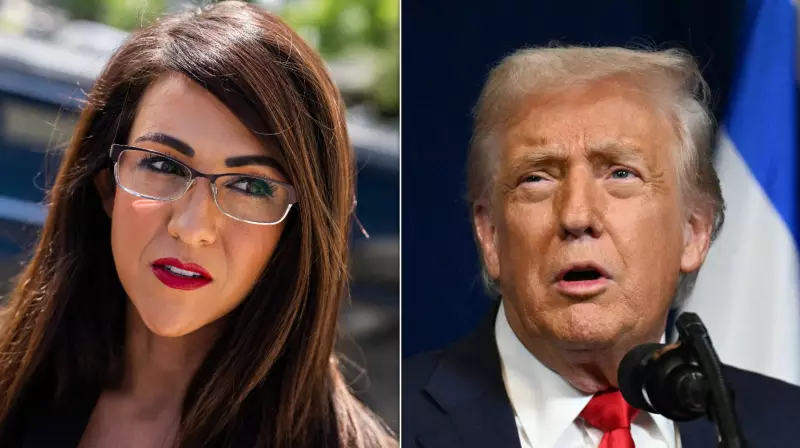
In a move that has ignited controversy and accusations of political payback, President Donald Trump vetoed a bipartisan bill on Monday that would have guaranteed clean drinking water for tens of thousands of Colorado residents. The decision prompted the bill's sponsor, Republican Congresswoman Lauren Boebert, to publicly question whether the veto was an act of "political retaliation."
A Question of Retribution Over Epstein Files
Representative Lauren Boebert, a staunch Trump ally from Colorado, expressed her concerns in a statement shared on social media platform X on Tuesday. "And I sincerely hope this veto has nothing to do with political retaliation for calling out corruption and demanding accountability," Boebert stated. She emphasized that "Americans deserve leadership that puts people over politics."
The rift stems from Boebert's break with the President over the release of files related to the late financier and convicted sex offender Jeffrey Epstein. Despite her consistent support for Trump's agenda and his claims of 2020 election fraud, Boebert backed a discharge petition in November to force a vote on releasing the Justice Department's Epstein records. Her signature helped advance the Epstein Files Transparency Act. Following this action, she was summoned to an emergency White House meeting, later posting a cryptic thank you to unnamed officials.

The Vetoed Bill: Clean Water for 50,000 People
The legislation in question, the Finish the Arkansas Valley Conduit Act, was sponsored by Boebert. It aimed to fund the construction of a long-delayed pipeline to provide clean drinking water to approximately 50,000 people in communities within Colorado's Arkansas River Valley. The bill had passed both the House and Senate with unanimous, bipartisan support.
Boebert expressed bewilderment at the veto, noting the project's non-controversial nature. "Why? Because nothing says 'America First' like denying clean drinking water to 50,000 people in Southeast Colorado," she remarked. She pointed out that many of her constituents had voted for Trump "in all three elections."
Administration's Justification and a Second Veto
In his veto message to Congress on Tuesday, President Trump labeled the water project an unacceptable "taxpayer handout" that would be too "expensive." This justification came despite a Congressional Budget Office estimate placing the federal cost at under $500,000. Boebert responded with sarcasm, stating, "My bad, I thought the campaign was about lowering costs and cutting red tape."
In the same week, Trump vetoed another bill with strong bipartisan backing: the Miccosukee Reserved Area Amendments Act. This legislation would have assisted a Native American tribe in Florida with flood protection for structures on their land. Trump asserted that "it is not the Federal Government's responsibility." The veto did not acknowledge that the Miccosukee tribe had successfully legally challenged the administration's authority to build a nearby immigration detention center, known as "Alligator Alcatraz," earlier in the year.
The dual vetoes highlight ongoing tensions between the President and some members of his party, even on issues that typically garner widespread support across the political aisle. The situation leaves the future of critical infrastructure and tribal aid projects in limbo.