Trump's Persistent Pressure on Ukraine Amid Putin's Escalating War Crimes
In a stark departure from previous U.S. policy, President Donald Trump has maintained his tacit approval of Russian dictator Vladimir Putin's invasion of Ukraine, now in its fourth year. Despite Putin's inability to replenish tens of thousands of monthly troop losses and a grinding halt to his ground offensive, Trump has escalated demands on Ukrainian President Volodymyr Zelenskyy to cede territory rather than resuming defensive weapons shipments or increasing economic pressure on Russia.
Escalating Attacks and U.S. Policy Reversal
The conflict has intensified dramatically since Trump took office in January 2025. Under predecessor Joe Biden, Russia launched 13,897 missiles and drones at Ukraine in 2024, averaging 38 per day. In Trump's first year back, this surged to 57,333, or 157 daily—a 300% increase. This escalation coincided with Trump's cutoff of new U.S. military aid to Ukraine, a move that experts link directly to the heightened civilian casualties.
Trump's recent remarks underscore his approach. "Ukraine better come to the table fast, is all I'm telling you," he told reporters on Monday night, echoing warnings to Zelenskyy to seize a "great opportunity" for a deal with Russia. In reality, Zelenskyy has repeatedly accepted U.S. calls for a ceasefire while Putin rejects negotiations, continuing to target civilians with missiles and drones.

Expert Analysis: Trump's Motivations and Putin's Strategy
Analysts argue Trump's focus on pressuring Ukraine stems from perceiving it as weaker and more coercible. John Bolton, a former Trump national security adviser, stated, "Trump wants any kind of deal he can get that results in a ceasefire, hoping this will be evidence for his Nobel Peace Prize campaign. He doesn't care about the substance of an agreement, just getting one."
Jim Townsend, a Pentagon and NATO veteran now with the Center for a New American Security, added, "Putin will keep stalling until he gets his way, either by Trump forcing Zelenskyy to the table or by some battlefield victory, which doesn't look likely either. So he will always demand his maximalist position, knowing Zelenskyy will never agree and that irritates Trump, who squeezes Zelenskyy even more."
White House and Diplomatic Shifts
White House press secretary Karoline Leavitt defended Trump's stance, repeating his false claim that the U.S. was bankrolling Ukraine's defense under Biden. In fact, Western European allies have provided more military and financial assistance since the invasion began. Trump's rhetoric has consistently sided with Russia, including blaming Ukraine for the invasion and criticizing Zelenskyy for provoking a larger neighbor.
Secretary of State Marco Rubio's recent European tour highlighted a diplomatic tilt toward Russia. He skipped a Ukraine meeting at the Munich Security Conference, instead delivering a "blood and soil" Christian nationalist speech and visiting pro-Russia leaders in Hungary and Slovakia, endorsing Hungarian autocrat Viktor Orban. State Department spokesman Tommy Pigott dismissed criticism, insulting media but not addressing the pro-Russia focus.
Putin's Quagmire and Recruitment Crisis
Ironically, Trump's demands come as Ukraine's military inflicts heavy losses on Russian forces. According to the Institute for the Study of War, Ukraine now kills and injures more than the 35,000 soldiers Putin can monthly conscript. The Center for Strategic and International Studies estimates Russia has suffered 1.2 million military casualties since 2022, including up to 325,000 deaths—far exceeding U.S. losses in Vietnam, Afghanistan, and Iraq.
Putin has resorted to involuntary drafts in Russia and recruiting mercenaries from Africa and Asia, drawing protests from leaders like Kenya's Foreign Minister Musalia Mudavadi, who called the recruitment "unacceptable and clandestine." Despite increased civilian attacks, experts doubt this will break Ukrainian resolve. Fiona Hill, a former Trump NSC Russia expert, noted, "What it does do is make the people under bombardment more willing to resist."

Historical Context and Trump's Putin Affinity
Trump's long-standing affinity for Putin, dating back to 2013 attempts to build a Trump Tower in Moscow, has shaped his response to the war. He praised Putin as a "genius" during the invasion and claimed he could end the fighting quickly due to their relationship. However, Putin has made no concessions, and Trump's efforts, like rolling out a red carpet in Alaska, have yielded no ceasefire.
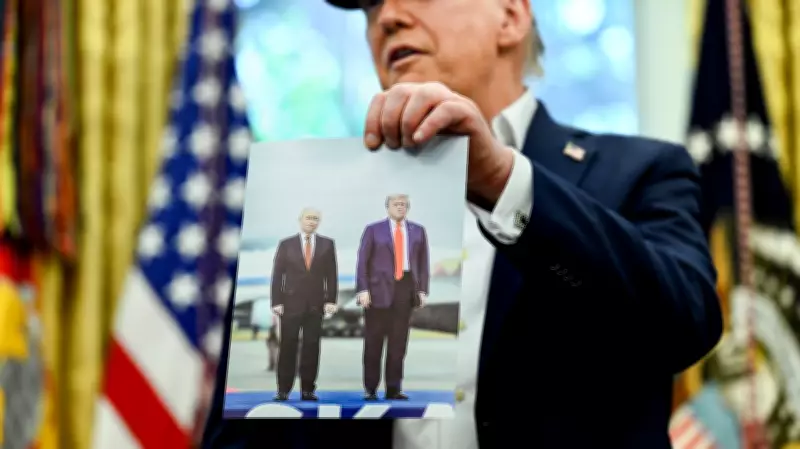
Trump continues to defend Putin, calling election interference investigations a "hoax" and displaying photos of them together in the West Wing. As Hill summarized, "Trump looks more and more impotent. Which is more why he wants Zelenskyy to give it up, to capitulate." The war remains a deadly stalemate, with U.S. policy increasingly aligned against Ukrainian interests.