Trump Rates Iran Conflict as '15 out of 10,' Claims Iranian Leadership Being Rapidly Eliminated
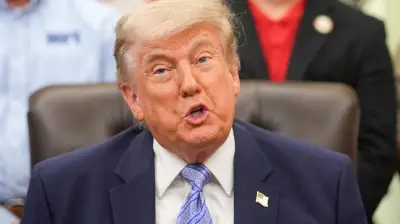
President Donald Trump on Wednesday delivered a striking assessment of the ongoing conflict with Iran, rating U.S. performance as a 15 on a scale of 10 while asserting that Iran's leadership is being rapidly eliminated. The comments came during a gathering of technology executives at the White House, where Trump provided his characteristically bold perspective on the military engagement now in its fifth day.
Expanding Conflict and Military Developments
The conflict has expanded significantly, with recent developments including a U.S. submarine sinking an Iranian warship off the coast of Sri Lanka and fresh explosions reported across multiple locations in the Middle East. Trump emphasized the strength of the U.S. position, stating, "We're doing well on the war front, to put it mildly. Somebody said on a scale of 10, where would you rate it? I said about a 15."
The president further elaborated on the situation regarding Iranian leadership, claiming, "We're in a very strong position now, and their leadership is just rapidly going. Everybody that seems to want to be a leader, they end up dead." He added that Tehran's arsenal of ballistic missiles was being "wiped out rapidly" as part of the ongoing military operations.

White House Statements and Policy Considerations
White House Press Secretary Karoline Leavitt addressed reporters on Wednesday, stating that Iran's clerical government was being "absolutely crushed" and was "paying in blood" but declined to confirm whether Trump specifically wanted regime change in Tehran. Leavitt did reveal that Trump is "actively considering" a U.S. role in Iran following the conclusion of the American-Israeli operation against the country.
"I think it's something the president is actively considering and discussing with his advisors and his national security team," Leavitt told a briefing. She also rejected as "false" reports that Trump had agreed to arm Kurdish separatist militia in Iran to facilitate an uprising against the government, though she confirmed that Trump had spoken to Kurdish leaders.
Strategic Justifications and Future Plans
Trump reiterated his justifications for attacking Iran, asserting that Tehran was on its way to obtaining nuclear weapons. "When crazy people have nuclear weapons, bad things happen," Trump added during his remarks. The U.S. leader pledged that he would "continue forward" with the joint air campaign with Israel that reportedly resulted in the death of Iranian supreme leader Ali Khamenei on the opening day of operations last Saturday.
The administration has faced criticism following days of mixed messages about the rationale for the war, particularly given Trump's previous campaign boasts about starting "no new wars." The president has yet to articulate a clear plan for what happens after the conflict concludes or specify whether he seeks wholesale change in Iran's government or intends to work with remnants willing to negotiate with Washington.
Regional Dominance and Military Projections
Leavitt also stated that the United States and Israel expected to achieve "complete and total dominance" over Iranian airspace in the "coming hours," echoing similar projections made earlier by Pentagon officials. This assertion comes as the conflict continues to evolve with significant military engagements across multiple theaters.
The Trump administration's approach to Iran appears to draw parallels with recent policy in Venezuela, where following the U.S.-backed toppling of Nicolas Maduro in January, the administration has pursued cooperation with figures from the Venezuelan government while securing agreements to extract Venezuelan oil resources.
As the conflict enters a critical phase, questions remain about the ultimate objectives and post-conflict strategy, with the White House maintaining a position of military strength while offering limited clarity about long-term political goals in the region.