The United States and Iran have come close to all-out war this week, exchanging fresh strikes for two consecutive nights following the downing of a US Apache helicopter. This escalation raises the specter of a return to full-scale conflict, even as rhetoric suggests slim progress in negotiations.
Delayed Confirmation Raises Questions
It took Washington nearly 18 hours to confirm that an AH-64 Apache helicopter had been downed on Tuesday by an Iranian drone over the Strait of Hormuz. The successful rescue of its two pilots within hours contrasted with the delayed announcement, fueling speculation that US officials hesitated to disclose the loss. President Trump continued to portray the conflict as effectively over, leading to concerns that optics and political messaging may have shaped the timing of the disclosure.
Retaliatory Strikes and Strategic Targets
In a face-saving move, the United States launched what it called “very powerful” retaliatory and “self-defence” airstrikes on Tuesday against strategic targets in southern Iran near the Strait of Hormuz. This narrow waterway has become Tehran’s strongest bargaining chip, with Iran repeatedly threatening and obstructing oil tankers and commercial shipping in one of the world’s most vital trade corridors—a campaign many view as a form of modern-day piracy.

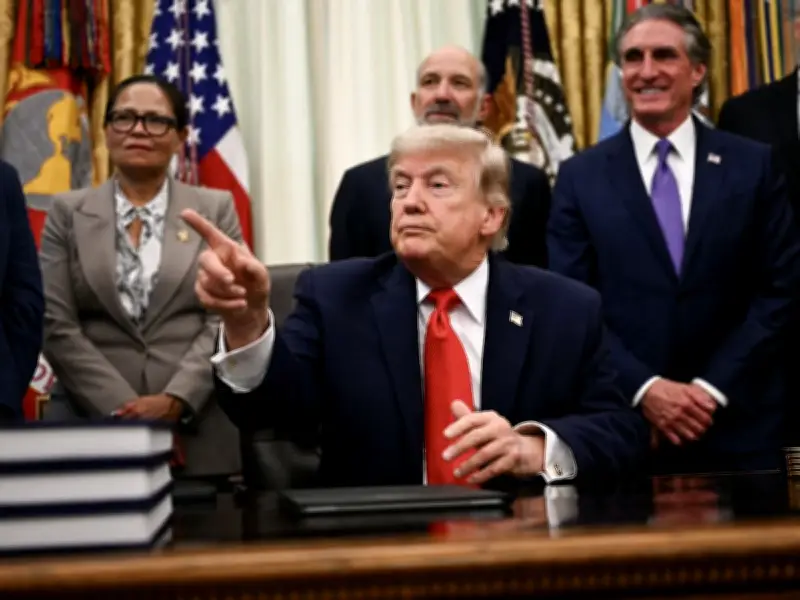
On Wednesday, President Trump sat in the Oval Office surrounded by his national security team and warned: “We hit them hard yesterday, and we’re going to hit them hard again today.” He intensified his rhetoric, seeking to pressure Tehran into accepting a deal. Within hours, the United States launched another wave of strikes across Iran, once again describing the attacks as “self-defence.” The operation targeted strategic sites along the southern coast near the Strait of Hormuz, reportedly hitting air-defence systems and military installations.
Perception vs. Reality
Trump’s daily proclamations about an imminent deal with Iran, coupled with claims that its military is a “complete and total mess” and that “the Bully of the Middle East is DEAD!!!,” appear designed to shape perception rather than describe reality. The message is clear: reassure jittery financial markets, project strength abroad, and convince American voters that he is prevailing in the conflict.
The “bully” is not dead. After the US strike on Iran in retaliation for the Apache helicopter shoot-down on Tuesday, I received messages from my family in Kuwait confirming what I had expected. Once again, as had occurred since the outset of the war on Feb. 28, Iranian missiles and drones were launched toward the country. Although their apparent targets were US military bases in the desert, the sound of interceptions was loud enough to wake entire neighbourhoods, while distant blasts rattled homes in the middle of the night. Similar attacks were directed at US bases in Jordan and Bahrain—a stark reminder that Iran remains capable of projecting force across the Gulf despite repeated claims that it has been decisively defeated.
Strategic Shift in Iranian Doctrine
Earlier this week, Iran’s largely intercepted strikes on Israel revealed more than military intent; they exposed a strategic shift. For decades, Tehran confronted its adversaries indirectly through proxies such as Hezbollah and the Houthis, relying on covert operations and carefully measured retaliation. That doctrine now appears to be changing.