Trump Reiterates Greenland Ambitions and NATO Criticism in Davos Address
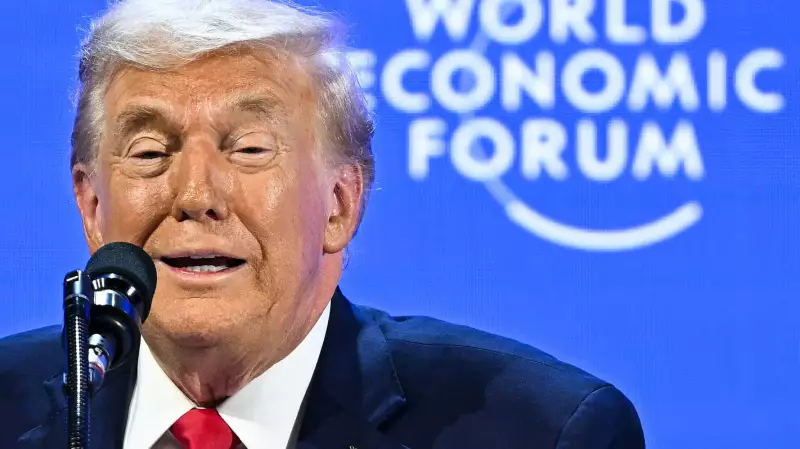
Former President Donald Trump used his platform at the World Economic Forum in Davos, Switzerland, to renew his longstanding demand for Denmark to cede Greenland to the United States. During a 72-minute speech delivered to an audience of global leaders and business executives, Trump made a series of controversial statements that are likely to further strain relationships with traditional American allies.
Greenland Acquisition Remains Central Focus
Trump devoted significant portions of his address to articulating his vision for American acquisition of Greenland, the massive Arctic island currently under Danish sovereignty. While assuring attendees that he would not use military force to obtain the territory, Trump argued that the United States should have retained control after World War II.
"Then after the war — which we won, we won it big. Without us right now, you'd all be speaking German and a little Japanese, perhaps," Trump told the international audience. "After the war, we gave Greenland back to Denmark. How stupid were we to do that?"

The former president repeatedly emphasized Greenland's strategic importance, describing it as "a big, beautiful piece of ice" that forms part of North America's northern frontier. He suggested Denmark's inability to defend the territory during World War II justified American control, despite confusing Greenland with Iceland on multiple occasions during his remarks.
False Claims About NATO Alliance
Trump made several inaccurate statements about the North Atlantic Treaty Organization, falsely claiming that the alliance had never provided benefits to the United States. "We never asked for anything, and we never got anything," he asserted, questioning whether NATO members would support America if called upon.
These claims contradict historical records showing that NATO invoked its mutual defense clause for the first time following the September 11, 2001 terrorist attacks, with member nations subsequently joining American military operations in Afghanistan for many years.
Continued Election Fraud Allegations
As has become characteristic of his public appearances, Trump repeated baseless claims about the 2020 presidential election being stolen from him. "It was a rigged election. Everybody now knows that they found out people will soon be prosecuted for what they did," he declared without providing evidence.
These assertions persist despite numerous failed legal challenges to election results and the absence of credible evidence supporting widespread fraud claims. Trump's remarks came nearly five years after his attempts to overturn the election culminated in the January 6, 2021 Capitol insurrection.
Economic Policy and Tariff Threats
Trump praised tariffs as effective policy tools during his address, though he incorrectly suggested that exporting nations bear the cost of these import taxes. He referenced but did not specifically detail his announced 10% tariff on eight NATO allies participating in military exercises in Greenland, a penalty scheduled to increase to 25% by June 1 if Denmark refuses to transfer Greenland to American control.
The potential impact of these tariffs remains unclear, particularly regarding their compatibility with the trade agreement Trump negotiated with the European Union last summer. Six of the eight nations targeted by the threatened tariffs are EU members, creating potential diplomatic complications.
Broader Speech Content and Reception
Beyond his Greenland and NATO comments, Trump's Davos address resembled his typical campaign-style speeches. He criticized President Joe Biden, made inaccurate claims about inflation, and employed racially charged language when discussing Somali immigrants. The overall tone and content seemed designed more for domestic political consumption than international diplomacy.

European attendees at the prestigious economic conference likely found some relief in Trump's assurance that he would not use military force to acquire Greenland, though this reassurance was surrounded by arguments justifying American ownership of the territory. The former president's remarks highlighted ongoing tensions in transatlantic relations that have persisted since his initial term in office.