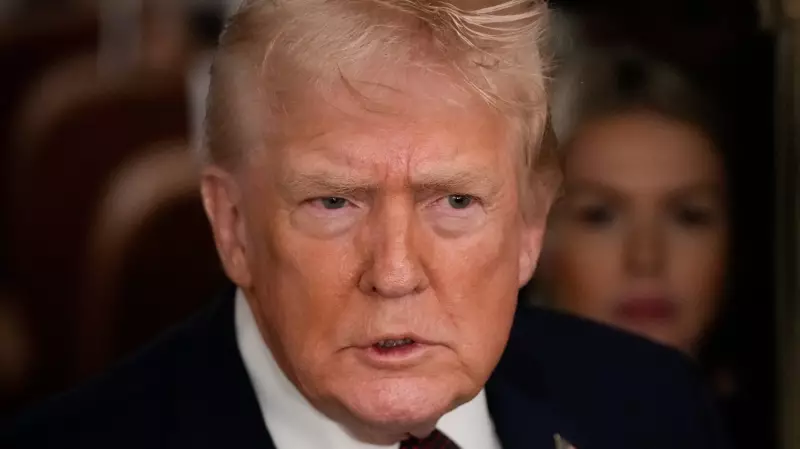
Former U.S. President Donald Trump seemed to have no memory of a specific financial promise he made to the American public during a recent interview, raising fresh questions about his recall as he campaigns for another term.
A Viral Moment of Forgetfulness
In audio from a sit-down with The New York Times last week, reporter Katie Rogers asked Trump when Americans could expect to receive the $2,000 checks he had previously pledged. Trump had promised these would be funded by revenue from his proposed tariffs.
Trump's immediate response was one of apparent confusion: “I did do that? When did I do that?” After Rogers began to clarify, Trump cut her off, shifting the topic to a different payment. “Well, I did $1776 for the military, right?” he said, referencing a ‘warrior dividend’ payment to military personnel ahead of Christmas during his administration.

Reports note that those $1,776 payments, symbolizing the year of America's founding, were funded through money allocated by Congress, not through tariff income.
Reviving the Pledge Under Pressure
When pressed further by Times reporter Tyler Pager on the original $2,000 commitment, Trump revived the promise. “Well, I am going to,” he stated. “The tariff money is so substantial that’s coming in that I’ll be able to do $2,000 sometime, I would say, toward the end of the year.”
This pledge was not a new idea. In November, Trump explicitly promoted the concept on his Truth Social platform, promising “a dividend of at least $2,000 a person (not including high income people!)” from money raised by his tariffs policy.
A Pattern of Unfulfilled Dividend Promises
This incident is not the first time Trump has floated the idea of direct payments that have yet to materialize. Earlier in his hypothetical second term, he similarly proposed sending Americans $5,000 dividend checks. That plan involved using public funds saved through spending cuts and job reductions overseen by a proposed, unofficial Department of Government Efficiency (DOGE), an idea linked to billionaire Elon Musk.
As with the recent $2,000 pledge, those $5,000 checks are still not in the mail. The exchange with the Times comes as Trump's health and cognitive abilities face increasing scrutiny from political opponents and media analysts in the lead-up to the November election.
The moment highlights the ongoing debate about the feasibility of his economic promises and provides a stark example of the memory lapses that his critics frequently emphasize.