As word spread on social media Saturday night about a third assassination attempt on President Donald Trump, the reaction felt oddly jaded. Some people shrugged it off — with many saying 'we’ve seen this movie before' — while others immediately started searching for proof that the shooting at the White House Correspondents’ Association Dinner was staged or a false-flag operation. The leading theory among skeptics was that the shooting was orchestrated by the Trump administration for political gain before the midterms and to build support for the construction of a $400 million ballroom at the White House.
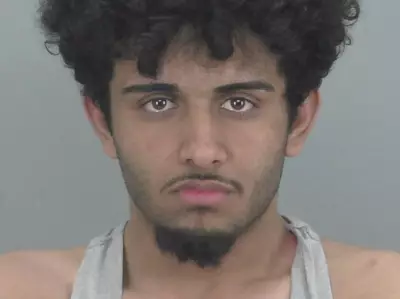
Within MAGA circles, the response has been relatively muted. Where there has been reaction, it’s largely mirrored Trump’s own talking points: his followers said the incident underscores the need for a ballroom outfitted with bulletproof glass and drone-proof ceilings. The suspect in the shooting, Cole Tomas Allen, 31, from Torrance, California, rushed the event while armed before law enforcement stopped him. While details are still emerging, all available evidence, including an alleged manifesto, points to the gunman having anti-Trump motives.
Information Environment Under Strain
The twin impulses many people showed online — either to shrug off the attempted assassination or to search for signs it was an inside job — reflect just how compromised the information environment has become, said Nathan Walter, a professor of media psychology at Northwestern University.

'In a highly polarized media landscape, people aren’t always consuming information to get the most accurate account ― they’re consuming it to reinforce what they already believe, so the same event gets pulled in completely different directions depending on which media ecosystem you’re in,' Walter told HuffPost.
That dynamic is especially pronounced in fast-moving, high-uncertainty situations like Saturday’s shooting. Early on, there’s very little verified information, but a huge demand for explanation. Walter said that this creates a window in which people try to fill in the gaps with narratives that 'make sense' to them, even if those narratives are speculative or outright bizarre.
Conspiracy Theories Flourish
Even people who claimed they’d never been one for conspiracy theories were putting on their tinfoil hats this weekend. 'When there are unusual or ambiguous details, like an image that doesn’t match people’s expectations of how a crisis should look, that can momentarily pull even non-conspiracy-minded individuals into speculation,' Walter said. 'Not because they’ve changed who they are, but because the situation leaves just enough uncertainty for interpretation to rush in.'
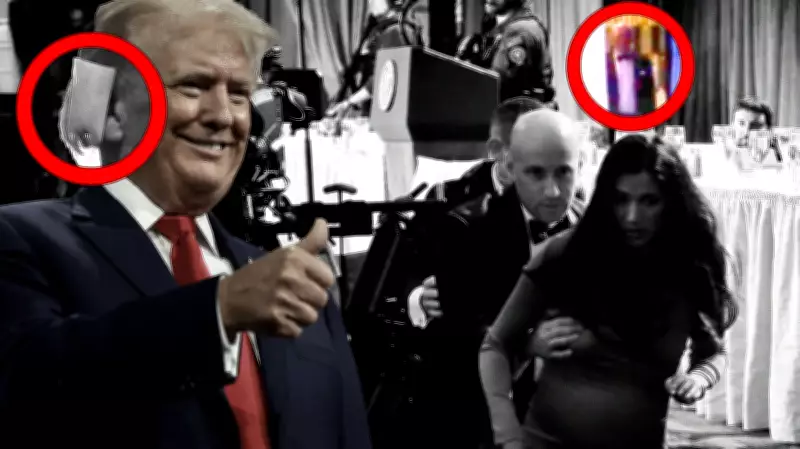
That’s what happened over the weekend — too many details from the dinner that didn’t pass the smell test, online commentators said. People questioned why Vice President JD Vance was pulled offstage by the Secret Service before Trump. They found it suspicious that, during a red-carpet interview ahead of the event, press secretary Karoline Leavitt said that 'shots will be fired' about the president’s speech. They also flagged how MAGA accounts appeared to post in unison afterward about the need for a White House ballroom, and a photo that seemed to show Trump calmly watching from behind the stage as his cabinet rushed out of the room.
Of course, a certain segment of the American population has always been prone to conspiracy theories. 'Sixty some odd years later, a majority of Americans continue to think the John F. Kennedy assassination was a conspiracy rather than a lone gunman,' said Joseph Uscinski, a professor of political science at the University of Miami.
Because conspiracy theories have become so mainstream today, though, Uscinski said he doubts the WHCD shooting will have the same sticking power as those JFK assassination conspiracy theories. 'I am not sure these current conspiracy theories will be any more relevant two years from now than the prominent conspiracy theories of two years ago, namely that Taylor Swift was going to rig the Super Bowl for Joe Biden and Princess Kate was a robot, are now,' he said.

Why People Believe Conspiracy Theories
As for the general reason why people believe conspiracy theories, it comes down to some basic human nature. 'We all have a general desire to reduce feelings of lawlessness and chaos,' said Claire Robertson, an assistant professor of psychology at Colby College in Maine. 'When we see bad things happen to people, we want to believe that there is a reason they happened or people who want to believe that there is a simple solution ― for instance, build the ballroom,' she said. 'Real life is messy and chaotic, but it’s easier to function if we try to put things into order ― sometimes, that order is a conspiracy.'
The 'Boy Who Cried Wolf' Effect
Presidents have long been targets of conspiracy theories ― from 9/11 theories about George W. Bush to birther claims about Barack Obama. Trump, in particular, is a magnet for conspiracy theories on all sides — from so-called 'positive' ones like QAnon, which casts him as fighting a secret war against a global cabal, to more critical claims that he’s orchestrating events like assassination attempts for political gain.
As criticism of Trump’s performance and handling of the Epstein files grows, even MAGA is increasingly convinced the Trump assassination attempt in Butler, Pennsylvania, was staged, WIRED reported recently. 'If you cannot look at this story and use critical thinking skills and have at least some questions, you are the problem and we need you to snap out of it,' Trisha Hope, a GOP national delegate from Texas and former Trump supporter, posted on X about Butler this month.
As conservative political columnist Matt Lewis wrote in an opinion piece for The Hill, 'We have entered a new and possibly ironic phase of the timeline: Trump is finally discovering what it’s like to be on the losing end of a conspiracy theory.'
Distrust and Disengagement
The Trump administration’s steady stream of false or misleading statements only creates more confusion, Robertson said. 'I do think that, given that there is a pattern of this administration obfuscating facts and generally being antagonistic towards the press and other sources people often turn to for information in moments of crisis, it tracks that a general information breakdown and lack of trust would exacerbate conspiracy spread,' Robertson said.
Mike Nellis, a Democratic strategist, pointed to how statements Trump made on '60 Minutes' cast more doubt on Saturday’s events. Trump appeared to fall as Secret Service agents escorted him off the stage, but in the interview, the president said that he was told to get lower. 'Lying about stupid s**t ― like whether you fell down during a very chaotic situation is why half the internet believes the whole thing was staged,' Nellis wrote on X.
There may be a partial 'boy who cried wolf' effect with Trump, too, Walter said, in the sense that when a public figure is frequently associated with misleading or contested claims, it can erode baseline trust. We may be experiencing 'Trump Assassination Attempt Apathy Syndrome.'
'But that distrust is not unique to Trump,' Walter said. 'After Brazil’s former President Jair Bolsonaro was stabbed in 2018, for example, some people immediately claimed it was staged to generate sympathy.'
The Role of the Internet
Naturally, this couldn’t happen without the internet. Historically, Americans were more likely to have a shared reaction to assassination attempts, largely because the media environment was more centralized and slower. Today, information moves instantly, but verification lags behind. 'That gap creates space for speculation and strategic framing, and once those narratives take hold, they’re very difficult to dislodge,' Walter explained.
As for those who disengaged or seemed unfazed by Saturday’s WHCD shooting, that reaction makes a lot of sense, too, Robertson said. 'There’s very little that any one individual can do about an event like this,' she said. 'We’re deeply averse to that feeling of helplessness so I also understand how people might try to avoid that feeling by just shoving their heads in the sand.'