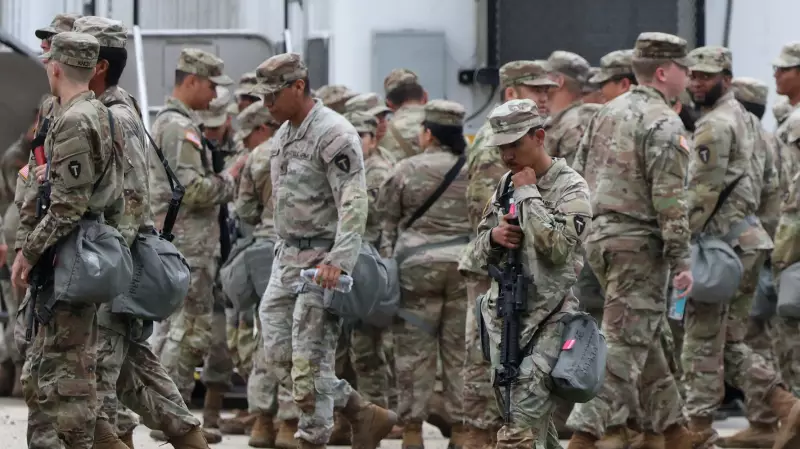
The U.S. Supreme Court delivered a significant blow to the Trump administration on Tuesday, refusing to allow the deployment of National Guard troops to the Chicago area to support its immigration enforcement actions.
A Legal Roadblock for Federal Troop Deployment
The justices declined an emergency request from the Republican administration to overturn a ruling by U.S. District Judge April Perry, who had blocked the troop deployment. An appeals court had also previously refused to intervene. The Supreme Court took more than two months to act on the request. While this order is not a final ruling on the merits of the case, it represents a notable setback and could influence other lawsuits challenging President Donald Trump's attempts to use the military in Democratic-led cities.
This outcome is a rare Supreme Court loss for Trump, whose administration has won repeated victories in emergency appeals since he returned to office in January. The conservative-majority court has previously sided with the administration on issues like banning transgender people from the military, redirecting congressionally approved funds, and taking aggressive action against immigrants.

The Chicago Context and Broader Legal Battles
The administration had initially sought permission to deploy troops from Illinois and Texas. However, the contingent of about 200 Texas National Guard troops was later sent home from Chicago. Federal officials argued the troops were necessary to protect federal personnel and property from violent resistance to immigration law enforcement.
Judge Perry found no substantial evidence of a brewing "danger of rebellion" in Illinois and no reason to believe protests had obstructed the immigration crackdown. She first blocked the deployment for two weeks in 2025, then extended the order indefinitely while the Supreme Court reviewed the case.
The legal fight centres on the U.S. Immigration and Customs Enforcement facility in Broadview, a west Chicago suburb. This site has seen tense protests where federal agents have used tear gas and other chemical agents on demonstrators and journalists. Last week, authorities arrested 21 protesters outside the Broadview facility, citing injuries to four officers.
National Implications and Similar Cases
The Illinois case is part of a wider national legal conflict over National Guard deployments. Key developments in other states include:
- Washington, D.C.: The District's Attorney General is suing to halt the deployment of over 2,000 guardsmen. Forty-five states have filed positions in this case, with 23 supporting the administration and 22 supporting the lawsuit. More than 2,200 troops from Republican-led states remain in the capital.
- Oregon: A federal judge has permanently blocked Guard deployment there, and 200 troops from California were sent home.
- Tennessee: A state court ruled in favour of Democratic officials suing to stop an ongoing Guard deployment in Memphis.
- California: A judge ruled in September that deployment in the Los Angeles area was illegal. Only 300 of the thousands of troops sent remained by that point, and they were not ordered to leave.
The Trump administration has appealed the California and Oregon rulings to the 9th U.S. Circuit Court of Appeals, setting the stage for continued legal battles over the use of military personnel for domestic law enforcement.