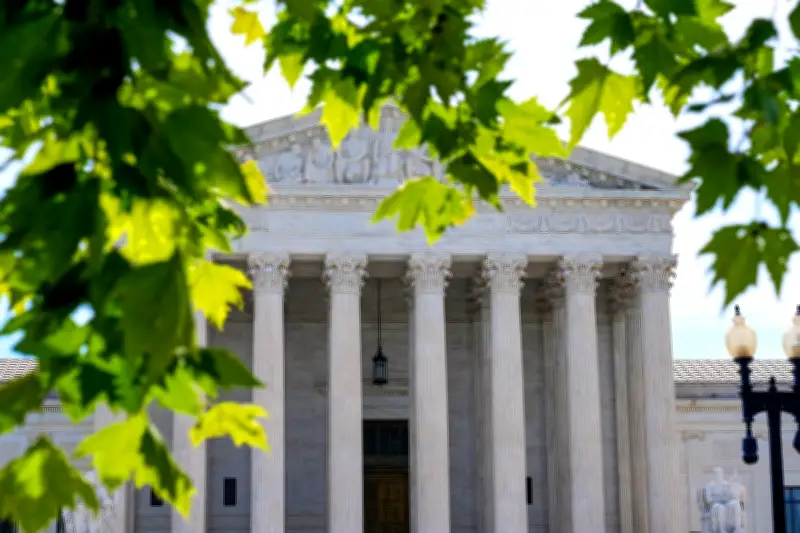
The U.S. Supreme Court has ruled that a New York prison inmate cannot sue corrections officers for cutting his dreadlocks, upholding qualified immunity protections for prison officials.
Background of the case
The inmate, identified in court documents as a Rastafarian, claimed that prison guards forcibly cut his dreadlocks in 2014, violating his religious rights under the First Amendment. He sought to sue the officers for damages, but lower courts dismissed the lawsuit, citing qualified immunity—a legal doctrine that shields government officials from liability unless they violate clearly established law.
According to court filings, the incident occurred at a New York state prison where the inmate was serving time. The prisoner argued that his dreadlocks were an integral part of his Rastafarian faith and that the cutting constituted religious discrimination.

Supreme Court decision
In a 6-3 ruling issued on June 23, 2026, the Supreme Court declined to hear the case, effectively leaving the lower court's dismissal in place. The majority opinion, written by Justice Samuel Alito, stated that the prison officials were entitled to qualified immunity because it was not clearly established that cutting an inmate's dreadlocks violated constitutional rights at the time of the incident.
“The law at the time did not provide clear guidance that such an action was unconstitutional,” Alito wrote. “The officers are therefore immune from suit.”
The decision drew sharp dissent from the court’s liberal justices. Justice Sonia Sotomayor, in a dissenting opinion joined by Justices Elena Kagan and Ketanji Brown Jackson, argued that the ruling “effectively gives prison officials a free pass to violate the religious rights of inmates.”
Impact and legal implications
The ruling reinforces the broad application of qualified immunity in the prison context, making it difficult for inmates to sue for alleged constitutional violations. Legal experts say the decision could discourage future lawsuits over religious accommodations in prisons.
“This is a significant setback for prisoners’ religious freedom,” said Sarah Thompson, a civil rights attorney at the American Civil Liberties Union. “The Supreme Court has once again shielded corrections officers from accountability, even when they infringe on fundamental rights.”
The case is one of several recent Supreme Court rulings that have narrowed the scope of inmate lawsuits. In 2022, the court made it harder for prisoners to sue over abusive conditions, and this latest decision continues that trend.
Reaction from the inmate's legal team
Lawyers for the inmate expressed disappointment but said they would continue to advocate for religious accommodations in prisons. “Our client’s faith was deeply important to him, and the cutting of his dreadlocks was a profound violation,” said attorney Michael Chen. “While the court has closed the door on this lawsuit, we hope it will spur legislative action to protect religious freedom in correctional facilities.”
The inmate, who has since been released from prison, was not available for comment.