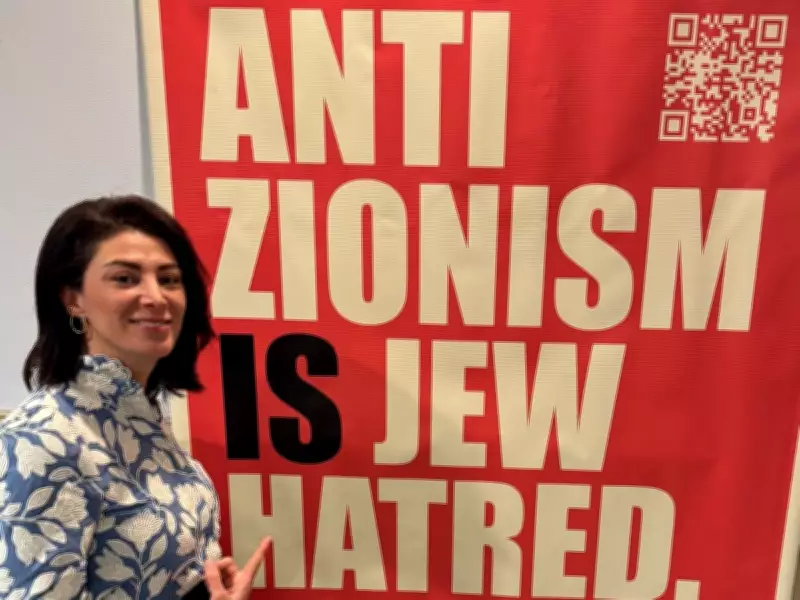
The first World Symposium Against Antizionism, held in Toronto, directly confronted one of the central ideological drivers of modern antisemitism. Organized by Tafsik Organization and Stop Antizionism, the event brought together academics, journalists, lawyers, dissidents, researchers, media personalities, and activists from across the political and ideological spectrum. They addressed a reality many Canadians still refuse to confront: antizionism has evolved beyond criticism of Israeli government policy into a social, political, academic, and institutional movement that treats Jewish self-determination as uniquely illegitimate.
Key Discussions and Panels
One of the most powerful discussions came during the panel on Islamic antizionism, featuring Rawan Osman, Abraham Hamra, and Loay Alshareef. These voices from Middle Eastern and Muslim backgrounds spoke openly about extremism, indoctrination, antisemitism, authoritarianism, and the weaponization of anti-Israel narratives. Such conversations require courage, as dissent often comes with enormous personal cost.
Another panel examined the collapse of public trust in legacy institutions that many Jews believe have failed to report on antisemitism and anti-Zionist extremism with consistency or moral clarity. Featuring Lizzy Savetsky, Eve Barlow, and Jesse Brown, moderated by Emily Austin, the panel highlighted a growing reality: independent voices are filling the vacuum left by institutions unwilling to confront anti-Jewish extremism directly.

Broader Implications
Over the last several years, Canadians have witnessed Jewish schools shot at, synagogues vandalized, Jewish students harassed on campuses, businesses targeted, and community centres threatened. Jewish neighbourhoods have faced weekly demonstrations that would not be tolerated outside almost any other minority community. Yet much of Canada’s institutional class continues insisting that antizionism and antisemitism are entirely separate phenomena.
The symposium may prove to be one of the most important Jewish public-policy conversations Canada has seen in years. It reflects a broader shift globally: Jews becoming less willing to remain silent simply to preserve social acceptance. Whether one agrees with every position taken or not, the willingness of figures like Savetsky and Barlow to endure online harassment and reputational attacks for speaking openly about antisemitism and Jewish identity underscores the urgency of the moment.