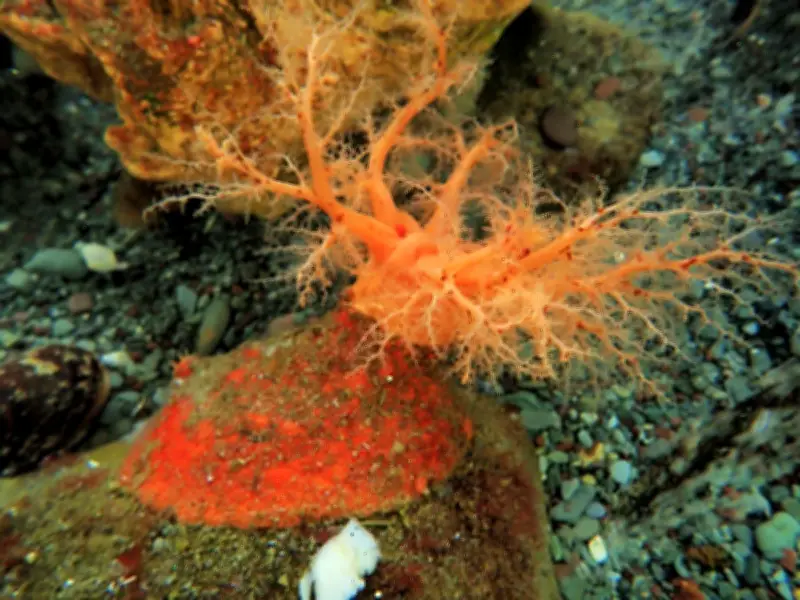
Scientists have discovered that certain sea cucumbers possess a remarkable ability: their flesh does not die when severed from the body. This phenomenon, described as 'zombie' flesh, could have significant implications for regenerative medicine.
Scarlet Sea Cucumbers Defy Biology
The study focused on Psolus fabricii, also known as the scarlet sea cucumber. Researchers at Memorial University of Newfoundland and Labrador found that pieces of this sea cucumber's flesh can survive independently for weeks, moving and responding to stimuli even after being detached.
Potential for Medical Breakthroughs
Lead researcher Emaline Montgomery explained that the tissue exhibits autonomous behavior, suggesting a decentralized nervous system. This ability to survive without a central brain could inspire new approaches to wound healing and tissue engineering.

- Survival Mechanism: The flesh continues to function, possibly due to distributed nerve cells.
- Regenerative Potential: Understanding this process may lead to advancements in human tissue repair.
- Research Implications: The study opens new avenues for exploring cellular resilience and regeneration.
The findings were published in a recent issue of a marine biology journal, highlighting the unique biology of echinoderms.