Senator's Contradictory War Remarks Ignite Political Firestorm
The question of whether America is actively engaged in war with Iran has become a contentious issue among supporters of former President Donald Trump, sparking intense debate and revealing deep political divisions. This controversy reached a new peak on Tuesday when a Republican senator appeared to argue both sides of the question within mere seconds, creating a viral moment that has drawn comparisons to authoritarian rhetoric.
Mullin's Contradictory Statements
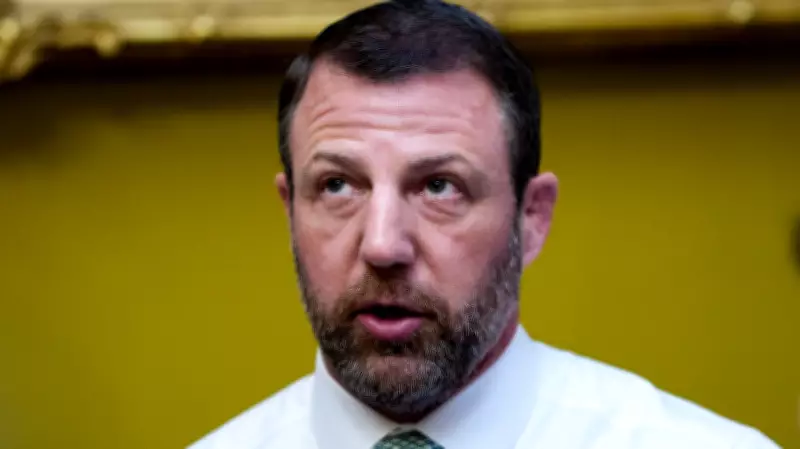
Senator Markwayne Mullin, a Republican from Oklahoma who gained attention on Monday for his controversial "smell" of war remark despite lacking military service, initially defended U.S.-Israeli military operations against Iran when speaking to reporters. "This is war and we're taking out the threat," Mullin declared emphatically.
However, when CNN's Manu Raju followed up by noting, "You will concede this is war," Mullin's position shifted dramatically. "We haven't declared war. They declared war on us but we haven't," he responded defensively.

Raju pointed out that both Donald Trump and commentator Pete Hegseth have referred to the attacks as "war," but Mullin repeated his contradictory stance: "We haven't declared it."
The Viral Exchange
The exchange quickly escalated as another journalist challenged Mullin directly: "Just now you said, 'This is war.'" Mullin countered by saying, "They've called it war," before admitting about his own statement: "OK, well, that was a misspoke but I was saying that they've declared war on us. But war is ugly. It always has been ugly. But we're taking out a regime that's been trying to attack us for quite some time."
When Raju pressed further, asking, "You're not conceding this is war," Mullin offered his final explanation: "We haven't declared war. So if we haven't declared war, then I don't see that. The president hasn't asked us to declare war yet but they have declared war on us. We're just simply fighting the threat that's been at our door for 47 years."
Expert Comparisons to Kremlin Rhetoric
The contradictory statements quickly spread across social media platforms, where authoritarianism expert Timothy Snyder drew a striking parallel to Russian rhetoric following the invasion of Ukraine. "This 'it's not a war but a special military operation' is very Kremlin March 2022," Snyder commented on X. "As is the propaganda that we are not starting a war but ending one. As is the confusion of oligarch media as it tries to be faithful in the confusion..."
Other commentators joined the criticism, with Carl Quintanilla noting sarcastically: "Not a 'war'. Just a Department of 'War'. ?" while Ari Cohn described the situation as "Unserious people in unserious times doing unfortunately very serious things."
Political Reactions and Analysis
The incident has highlighted broader political tensions, with Ed Krassenstein summarizing: "It's war but it's not 'war.' Republicans are in denial that Trump has taken America to war." Meanwhile, Mehdi Hasan characterized the Republican response as "Just a complete clown car from the GOP here."
This controversy underscores several critical issues:
- The semantic distinction between declared war and military conflict
- Political messaging challenges in describing military engagements
- The influence of former President Trump's terminology on Republican discourse
- Growing concerns about authoritarian-style rhetoric in American politics
The exchange reveals how language and definitions have become battlegrounds in contemporary political discourse, with significant implications for public understanding of military engagements and constitutional processes regarding war declarations.