Senate Resolution to Restrain Trump's Military Powers Faces Constitutional Challenge
A recent resolution introduced in the U.S. Senate, which seeks to restrict President Donald Trump from undertaking additional military operations against Iran, is being met with strong opposition on constitutional grounds. Critics argue that this measure violates Article II of the Constitution, which explicitly designates the president as the commander-in-chief of the nation's armed forces.
Historical Precedents of Presidential Military Actions
Since 1950, every U.S. president has authorized military interventions against foreign governments without first obtaining congressional approval or a formal declaration of war. For instance, Harry Truman deployed forces to South Korea in 1950, Lyndon B. Johnson sent troops to Vietnam in 1965, and Bill Clinton initiated military action in 1999 to halt atrocities in Serbia. More recently, George W. Bush led the invasion of Iraq in 2003, and Barack Obama ordered strikes in Libya in 2011.
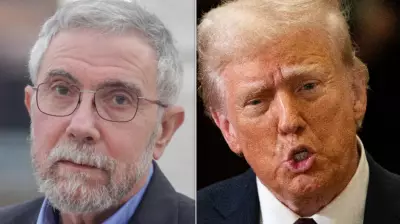
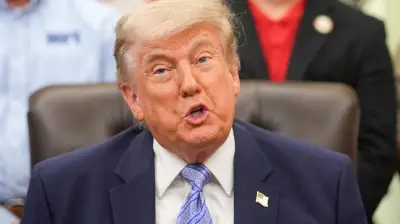
Despite occasional objections from opposition parties, these actions were not typically met with the intense personal attacks currently directed at President Trump. Following his strategic air strikes on Iran on February 28, 2026, Democrats in Congress have escalated their rhetoric, labeling him an "authoritarian ruler" and accusing him of a "gross violation of the Constitution."

War Powers Resolution and Legal Disputes
In an effort to curb presidential authority, Congress enacted the War Powers Resolution (WPR) in 1973. This legislation mandates that the president notify Congress before commencing military operations and requires congressional authorization if actions extend beyond 60 days. President Trump has reportedly complied with these notification requirements, keeping congressional leaders informed about the ongoing strikes in Iran.
However, the constitutionality of the WPR has been consistently challenged by every president since its inception. Historical cases, such as when President Clinton defied the resolution during the Kosovo conflict and when President Obama bypassed it for operations in Libya, resulted in lawsuits that were ultimately dismissed by the courts. This legal history underscores the lack of a constitutional basis for restraining the commander-in-chief as demanded by some congressional Democrats.
Hypocrisy and Partisan Criticisms
The hypocrisy in the current political discourse is particularly striking. Representative Nancy Pelosi, who was present during the military actions under Presidents Clinton and Obama, has publicly criticized Trump for allegedly "ignoring the Constitution." Similarly, Senator Chris Murphy has accused the president of being "a would-be dictator" who disregards constitutional principles.
These attacks are seen by some as misleading the public about the constitutional framework. The framers of the Constitution, including Alexander Hamilton, Elbridge Gerry, and James Madison, intentionally vested the president with the power to act swiftly and decisively in military matters, granting Congress only the authority to "declare war" rather than the broader power to "make war."
Global Reactions and Broader Implications
Amid the domestic political turmoil, reactions from the international community have been mixed. While some Democratic politicians have condemned the strikes, reports indicate that Iranians in cities like New York, London, and Los Angeles have celebrated the actions, viewing them as a blow against a regime they oppose. This contrast highlights the complex global perceptions of U.S. foreign policy.
Critics argue that the partisan rhetoric not only misrepresents constitutional requirements but also damages the United States' reputation on the world stage. By focusing on personal attacks rather than substantive debate, opponents may be undermining the country's ability to address genuine security threats, such as nuclear proliferation and terrorism.
In summary, the Senate resolution to limit President Trump's military powers is embroiled in a constitutional debate, with historical precedents and legal interpretations supporting the president's authority. As the political landscape continues to evolve, the balance between executive power and congressional oversight remains a contentious issue in American governance.