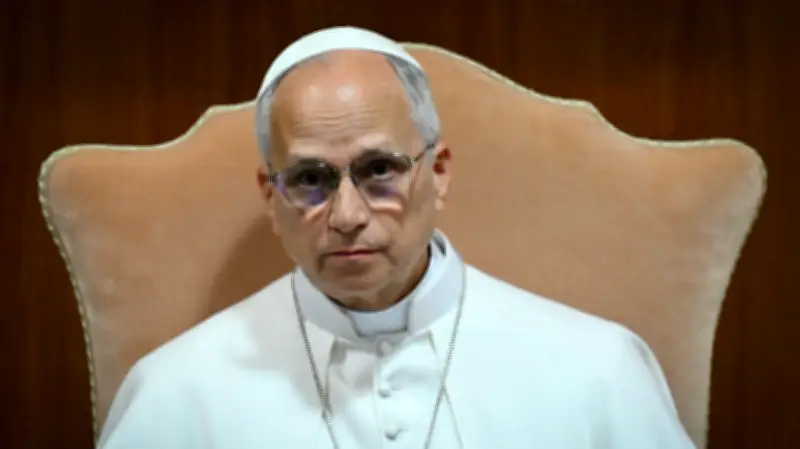
Artificial intelligence has taken over jobs and schools, but it will not replace humanity if the Pope has his way. In his 42,300-word open letter to over a billion Catholics worldwide, Pope Leo XIV issued a warning to safeguard humanity against the downsides of AI.
The Pope's Warning on AI
"Humanity — in all its grandeur and woundedness — must never be replaced or surpassed," Pope Leo XIV wrote in his papal document known as an encyclical. Titled "Magnifica Humanitas," or "Magnificent Humanity," the document outlines why people should not confuse what AI can do with human capabilities. Though a "valuable tool," the Pope acknowledged that AI will never possess a soul.
"We must avoid the misconception of equating this type of 'intelligence' with that of human beings," he wrote. "So-called artificial intelligences do not undergo experiences, do not possess a body, do not feel joy or pain, do not mature through relationships and do not know from within what love, work, friendship or responsibility mean."

Could the Encyclical Be Used for Religious Exemptions?
The Pope's strong stance against using AI to replace humanity's uniqueness has sparked discussions on social media about whether people can invoke his teachings to avoid using AI in daily life, which is now embedded in emails, meetings, and more. Under Title VII of the Civil Rights Act, employers must reasonably accommodate sincerely held religious beliefs unless doing so creates an "undue hardship" to a business. This typically includes schedule changes for religious holidays or permission to wear religious symbols. People have also used sincerely held beliefs to obtain exemptions from COVID-19 vaccines.
So could the Pope's AI warning be used to request a religious exemption from using AI at school or work? Possibly, according to employment attorneys. "I believe it is possible that an employee could invoke the Pope's 'Magnifica Humanitas' encyclical as a religious objection to using AI as part of their job," said James M. Cooney, a labor and employment law expert at Rutgers School of Management and Labor Relations.
Ryan Stygar, an employment attorney and author of the upcoming book "Get It in Writing: The Ultimate Guide to Your Rights at Work," said he expects some employees to successfully request religious exemptions from AI use. However, "actually proving you are entitled to the exemption may be the toughest hurdle to meet," he noted.
Proving Sincerity of Belief
You do not need to be Catholic to claim a religious accommodation from AI. You can be Lutheran, Baptist, or even Buddhist and invoke the Pope's teachings, Stygar said. But you must show that your belief is sincere. "The law is less focused on the dogmatic details of your religious beliefs than whether or not the belief is sincere," he explained. "Regardless of what is in the Bible or how different parishes interpret the Pope's words, if you truly believe it, then Title VII will protect you." This can be proved with a letter from a legitimate religious leader or organization.
The process of submitting a religious exemption is simple and usually involves telling your employer that you need an accommodation for a religious reason. However, proving that the accommodation is sincerely necessary is much harder. You might need to regularly attend a church associated with the Pope to demonstrate that his AI teachings are part of your regular faith. "If you have never set foot in a church but then use the Pope's statement to support a religious exemption, you probably will not be successful," Stygar said. "That sounds obvious, but you would be surprised how often this comes up."
Additionally, if you have used AI in the past without complaint, the sincerity of your belief will be hard to prove. Since AI is inescapable in many parts of life, proving that you are purposefully abstaining from AI for your faith could be challenging. If you use ChatGPT to write emails, read Google AI search summaries, or use an AI chatbot for ideas or travel planning, your anti-AI stance is inconsistent. "If you use AI directly, or even if you passively allow AI use in your daily life, you will struggle to prove your faith is consistent, and therefore, whether it is sincere," Stygar said.

Interpretation and Legal Precedents
The takeaways of "Magnifica Humanitas" are open to interpretation. "One Catholic practitioner may see the Pope's words as a call to refrain from AI use at work, while another may not, and both can be reasonable in their belief," Stygar noted. Even though significant documentation may be required to prove sincere beliefs, employers should not take such requests lightly. Employees have won large sums in past fights for religious accommodation related to technology. In 2017, the Fourth Circuit Court of Appeals upheld a damages award of $587,000 against an employer for failing to accommodate a West Virginia employee's religious belief that using a biometric hand scanner would mark him to the Antichrist.
Limits of Religious Exemptions
Before filing a religious accommodation request, know its limits. Getting a religious exemption does not mean you cannot be fired due to AI. The Pope's letter may help you abstain from using an AI tool at your job, but it cannot protect you from being replaced by AI. "The law does not mean you are immune to termination. It means you cannot be fired because of or in retaliation for making the request for a religious exemption," Stygar said. However, even if your employer is not on your side about refusing AI, the Pope might be if you take a stand for more thoughtful deployment of AI or human dignity. In his letter, Pope Leo XIV said that creating moral AI is not enough if only a few decide what that means or benefit from its use. "What is needed is a more active political involvement that is capable of slowing things down when everything is accelerating, and of protecting the opportunities for communities still to be able to participate and ask questions," he wrote.