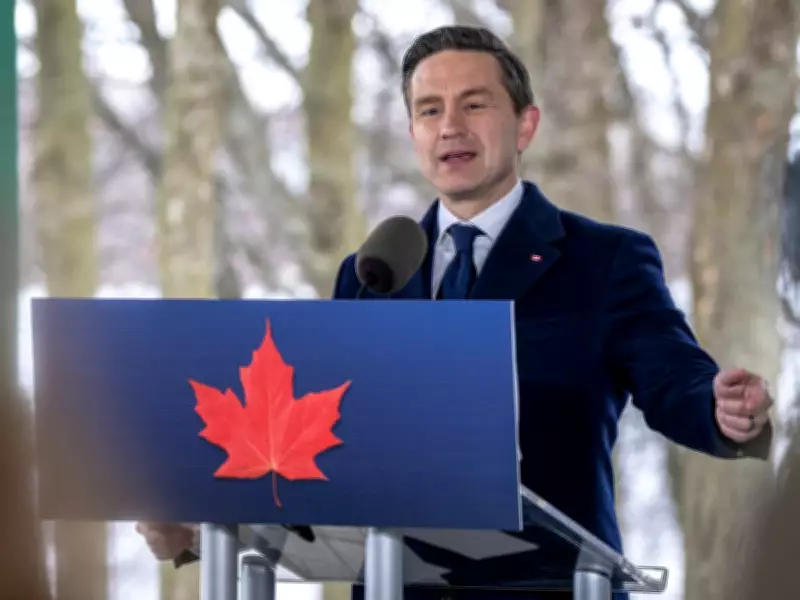
Conservative Leader's Trump Conundrum: A Deeper Look at Poilievre's Position
Recent Conservative Party meetings in Calgary revealed both strengths and lingering questions about Pierre Poilievre's leadership. While earning an impressive 87-per-cent vote of support and delivering what observers called a decent speech, Poilievre continues to face scrutiny regarding his approach to discussing Donald Trump. Media commentators noted that despite effective critiques of Mark Carney and Liberal policies, Poilievre has yet to articulate a clear strategy for engaging with the U.S. president, leaving Canadians uncertain about how he would manage this crucial relationship.
The Global Challenge of Trump Diplomacy
This uncertainty reflects a broader international dilemma. The entire world continues to grapple with how to effectively engage with the Trump administration, making Poilievre's position far from unique. Various world leaders have attempted different approaches with mixed results. King Charles has developed his own method of interaction, while former British Prime Minister Keir Starmer initially found success through diplomatic invitations before tensions emerged over issues like Greenland. The reality is that predicting Trump's preferences remains notoriously difficult, as his reactions often appear random and unpredictable.
Carney's Experience Versus Poilievre's Potential
During last spring's federal election, voters narrowly favored Mark Carney's approach to Trump relations by a margin slightly exceeding two percent. This preference seemed reasonable at the time, given Carney's extensive international experience and less Trump-like personal style. Indeed, their initial meeting appeared promising, with Trump showing apparent respect for the former Bank of England governor. However, subsequent developments have challenged this early optimism.

Ten months of Carney's "Trump-whispering" have yielded disappointing results for Canada. The much-discussed "dollar for dollar" tariff matching strategy proved short-lived when Trump responded with escalation threats, forcing Canadian retreat. Similarly, Ontario Premier Doug Ford's electricity threat lasted less than twenty-four hours before being withdrawn. Promised trade agreements with the United States repeatedly failed to materialize while other nations secured deals, and Carney's recent Davos criticism of Trump's disruption of international order has likely placed him on the president's unfavorable list.
Poilievre's Potential Compatibility Factors
Given Carney's struggles, the assumption that Poilievre would perform worse deserves reexamination. Several factors suggest potential compatibility between the Conservative leader and the U.S. president. Unlike Carney's intellectual approach, Poilievre presents as smart and articulate without being academic. His conservative populism mirrors Trump's flexible ideology, prioritizing public sentiment over rigid doctrine. Physically, Poilievre's appearance—young, fit, and conventionally attractive—aligns with Trump's noted preferences. His family life, featuring a charming wife and young children, presents a relatable personal narrative.
Perhaps most importantly, Poilievre's political experience could prove valuable. As a career politician who has experienced electoral defeat, he understands the necessity of answering to Canadian voters. This awareness might prevent excessive accommodation of Trump's demands. A long-term perspective would likely compel Poilievre to balance cooperation with necessary opposition when Canadian interests conflict with American demands. The fundamental reality remains that successful Canadian leadership requires maintaining domestic support while managing the complex relationship with our powerful southern neighbor.

Navigating the Political Reality
The central question isn't whether Poilievre could get along with Trump—evidence suggests compatibility is possible—but whether he would maintain sufficient independence. Swing voters' concerns about excessive accommodation may be overstated given Poilievre's political instincts. As a practical politician, he recognizes that lasting success requires satisfying Canadian constituents first. The delicate balance between cooperation and sovereignty represents the ongoing challenge for any Canadian leader facing the Trump presidency, a challenge Poilievre appears positioned to navigate with both potential advantages and acknowledged uncertainties.