Conservative Leader Challenges Liberal Economic Rhetoric Following Prime Minister's Davos Address
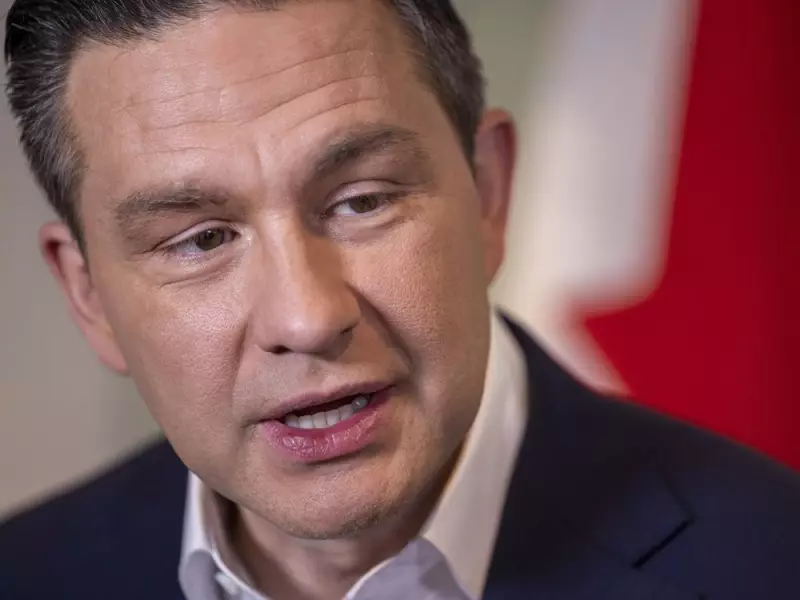
Conservative Party leader Pierre Poilievre has delivered a pointed response to Prime Minister Mark Carney's recent address at the World Economic Forum in Davos, Switzerland. In a detailed critique, Poilievre argues that while Carney's speech was eloquently delivered and well-crafted, it represents a continuation of Liberal rhetoric that fails to match Canada's economic reality.
The Disconnect Between Words and Economic Performance
Poilievre acknowledged Carney's restatement of long-standing principles about Canadian self-reliance and international cooperation, noting that Conservatives remain willing to work with the government to translate these words into tangible results. However, the opposition leader emphasized what he sees as a fundamental problem with Liberal governance.
"If Liberal words and good intentions were tradeable commodities, Canada would already be the richest nation on earth," Poilievre stated, highlighting what he described as a persistent gap between political rhetoric and economic reality.

The Conservative leader pointed to specific economic indicators that he believes demonstrate this disconnect. According to Poilievre, after nearly a year under Prime Minister Carney's leadership, Canada's economic situation has deteriorated significantly. He cited a doubled deficit, food inflation rates double those in the United States, housing costs that rank as the worst among G7 nations, and ongoing challenges with pipeline approvals and development regulations.
Unfulfilled Promises and Growing Vulnerabilities
Poilievre's critique extended beyond economic metrics to include broader governance issues. He noted the absence of progress on interprovincial free trade, unpassed crime legislation, and what he characterized as unfulfilled promises regarding negotiations with the United States. The Conservative leader particularly emphasized the doubling of U.S. tariffs on Canadian goods while Carney's promised countermeasures have failed to materialize.
"These unkept promises — which all followed grand speeches and announcements — make us especially vulnerable to the world's dangers," Poilievre argued. "We have had enough words. Now, we need results."
The opposition leader outlined several immediate priorities he believes the government should address:
- Unblocking Canadian resource development and approving pipelines
- Bolstering military capabilities to protect national sovereignty
- Addressing foreign interference from hostile powers including China, Russia, and Iran
- Implementing concrete measures to strengthen economic independence
Navigating the Complex U.S.-Canada Relationship
Poilievre addressed the challenging dynamics in Canada's relationship with the United States, acknowledging recent tensions while emphasizing the enduring importance of the partnership. He noted that despite recent tariffs and sovereignty questions from the southern neighbor, the economic reality remains unchanged.
"We still live next door to the biggest economy and military the world has ever seen," Poilievre observed. "We sell 20 times more to the U.S. than to China. One in 10 Canadian jobs rely directly and indirectly on trade with America."
The Conservative leader stressed the importance of protecting these economic relationships while simultaneously working to diversify Canada's trade partnerships. He concluded by quoting nineteenth-century British Prime Minister Lord Palmerston: "We have no eternal allies, and we have no perpetual enemies. Our interests are eternal and perpetual, and those interests it is our duty to follow."
Poilievre's response positions the Conservative Party as demanding a shift from political rhetoric to practical governance, setting the stage for continued debate about Canada's economic direction and international relationships in the coming parliamentary sessions.