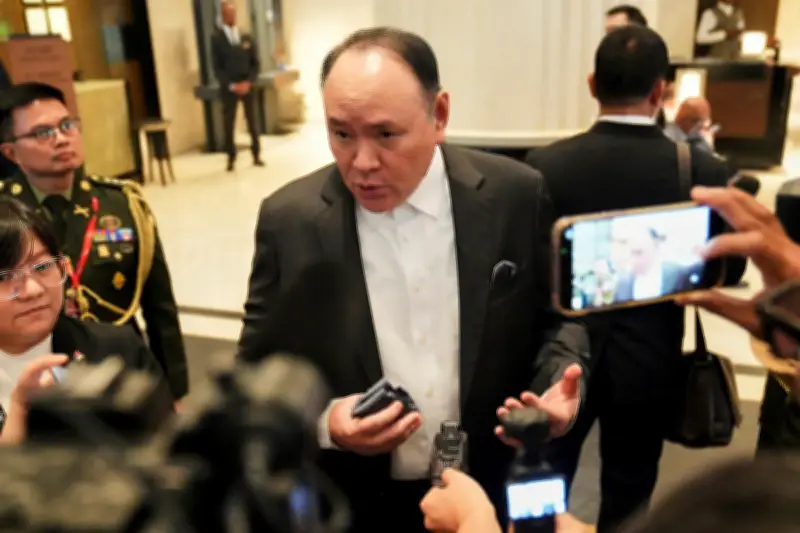
The Philippines has formally protested China's decision to impose sanctions on its Defense Secretary Gilberto Teodoro, describing the move as 'an unfriendly act' that undermines bilateral relations.
Background of the Dispute
The sanctions were announced by Beijing in response to what it called 'provocative actions' by the Philippines in the South China Sea. Manila has rejected these allegations, stating that its activities are within its sovereign rights under international law.
Philippine officials emphasized that the sanctions violate the principles of mutual respect and non-interference. Foreign Affairs Secretary Enrique Manalo said, 'We consider this an unfriendly act that damages the trust between our nations.'

Impact on Regional Stability
Analysts warn that the sanctions could escalate tensions in the region. The Philippines has sought support from allies, including the United States and Japan, to counter China's growing assertiveness.
China's foreign ministry defended the sanctions, stating they are necessary to protect national interests. 'China's actions are lawful and appropriate,' a spokesperson said.
Reactions from the International Community
The United States expressed solidarity with the Philippines, calling on China to reverse the sanctions. 'We stand with our ally in upholding a free and open Indo-Pacific,' a State Department official said.
Meanwhile, ASEAN members have urged restraint and dialogue to resolve the dispute peacefully.
Next Steps
The Philippines is considering diplomatic countermeasures, including a possible complaint to the United Nations. Secretary Teodoro stated, 'We will not be intimidated. Our commitment to defending our sovereignty remains unwavering.'
China has indicated it will maintain the sanctions unless the Philippines changes its stance on maritime issues.