Canada's independent fiscal watchdog has called for greater parliamentary oversight of the government's core financial targets, following the recent decision to abandon a decades-old benchmark.
PBO Calls for Parliamentary Approval Mechanism
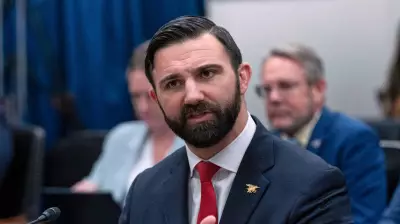
In testimony before the Senate finance committee on Tuesday, Interim Parliamentary Budget Officer Jason Jacques suggested that the federal government should require approval from the House of Commons before changing or eliminating long-established fiscal anchors. This recommendation comes directly in response to the Carney government's move in early November to discard the debt-to-gross domestic product (GDP) ratio as a guiding fiscal principle.
Jacques noted that the debt-to-GDP ratio had served as a key "fiscal anchor" for the last three decades and was cited by the current government as a crucial measure of fiscal sustainability as recently as this past fall. "It's a change in fiscal policy which wasn't discussed meaningfully on Parliament Hill," Jacques told committee members. "It happened without any discussion."

Government Defends Process as International Norm
The PBO's proposal would create a process similar to the one required for raising the national debt ceiling. However, the government defended its approach. John Fragos, a spokesman for Finance Minister François-Philippe Champagne, stated that the government is operating within international norms, where the executive chooses its fiscal anchors and Parliament subsequently votes on budgets that reflect them. Fragos pointed out that MPs voted to pass this year's budget bill.
The government's first budget, released last month, now operates with two remaining fiscal anchors: reducing the deficit-to-GDP ratio over each of the next few years and balancing the operating budget within three years. Jacques had previously cast doubt on the first target, telling a committee last month there is only a 7.5 per cent chance the government will achieve it.
Latest in a Series of Critical Assessments
This is the latest in a series of pointed critiques from the interim PBO, who has established a reputation for blunt fiscal analysis in his three months in the role. He has previously described federal spending as "stupefying," "shocking," and "unsustainable." He also criticized the government for using an "overly expansive" definition of investments to help meet its fiscal targets.
The budget projections underscore the scale of current spending. The Carney government's budget forecasts an average deficit of $64.3-billion between this fiscal year and 2029-30, more than double the projection from the 2024 Fall Economic Statement. It also projects a $78.3-billion deficit for this year, marking the third-highest in Canadian history and the largest ever in a non-pandemic year.
The debate highlights a fundamental tension between executive budgetary authority and parliamentary scrutiny, setting the stage for continued discussions on fiscal transparency and accountability in Ottawa.