Hungarian Leader Viktor Orbán Anchors Reelection Campaign in Anti-Ukraine Sentiment
In a bold political maneuver, Hungarian Prime Minister Viktor Orbán has positioned his opposition to Ukraine as the cornerstone of his bid for reelection. This strategy leverages rising nationalist sentiments within Hungary, framing the conflict as a pivotal issue for the nation's sovereignty and economic interests.
AI-Generated Imagery Fuels Political Messaging
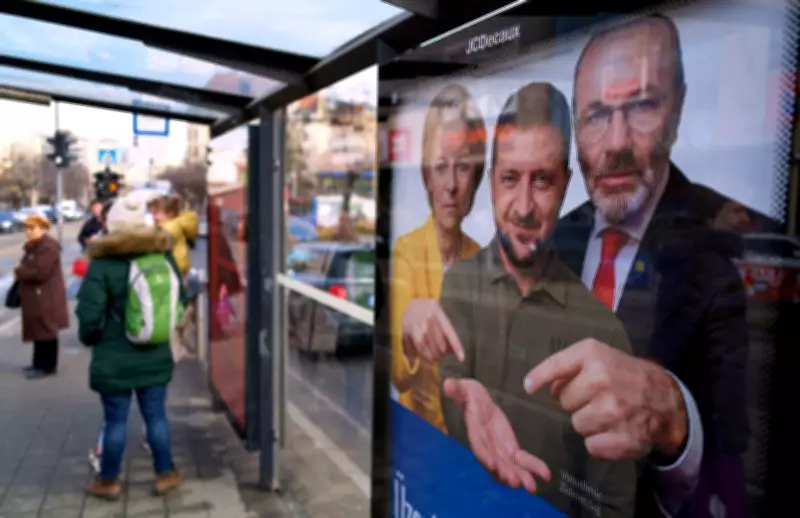
Recent developments in Budapest highlight the campaign's innovative tactics. A billboard displayed at a bus stop features an AI-generated image depicting Ukrainian President Volodymyr Zelenskyy flanked by European officials. This visual propaganda aims to reinforce Orbán's narrative of external interference and align his government with Hungarian autonomy.
The use of artificial intelligence in political advertising marks a significant shift in electoral strategies, allowing for the creation of compelling and potentially misleading visuals. Experts note that such techniques can amplify emotional responses among voters, particularly in contexts where media literacy may be limited.

Broader Implications for European Politics
Orbán's approach reflects a broader trend in European politics, where leaders are increasingly capitalizing on anti-establishment and nationalist platforms. By focusing on Ukraine, Orbán not only appeals to domestic audiences but also positions Hungary as a defiant voice within the European Union, challenging collective policies on support for Kyiv.
This stance has sparked debates about the future of EU unity and the role of member states in international conflicts. Critics argue that Orbán's rhetoric undermines regional stability, while supporters view it as a necessary defense of national interests against perceived overreach by Brussels.
Economic and Social Factors at Play
Underpinning the campaign is Hungary's complex economic landscape, including concerns over energy dependence and trade relations. Orbán's government has emphasized the financial burdens of supporting Ukraine, suggesting that resources should be redirected to domestic priorities such as infrastructure and social programs.
Public opinion polls indicate mixed reactions, with some segments of the population rallying behind the anti-Ukraine message, while others express apprehension about potential diplomatic isolation. The outcome of the election could hinge on how effectively Orbán mobilizes these sentiments in the coming months.
Looking Ahead to the Election
As the campaign intensifies, observers anticipate further use of advanced technologies and targeted messaging to sway voters. The integration of AI in political discourse sets a precedent that may influence elections beyond Hungary, raising questions about regulation and ethical standards in digital campaigning.
Ultimately, Orbán's reelection bid serves as a case study in the intersection of technology, nationalism, and foreign policy, with ramifications that extend far beyond Hungary's borders. The world watches closely as this pivotal moment in European politics unfolds.