Orbán's Defeat in Hungary Signals Hope for Democracy in Europe
In a political landscape often dominated by discouraging developments, the recent electoral defeat and imminent departure of Hungary's Viktor Orbán stands as a particularly significant event. This outcome carries substantial weight despite originating from a relatively small nation, offering a beacon of hope for democratic resilience.
A Small Nation with Outsized Influence
Hungary's geographical footprint is surprisingly compact—larger than New Brunswick yet smaller than Newfoundland—with a population of approximately 9.5 million, nearly seven million fewer than Ontario alone. Despite ranking as the world's 46th largest economy, Hungary maintains disproportionate prominence on the international stage, largely attributable to its rich and complex historical tapestry.
The nation boasts a millennium of history, predating Canada's existence by centuries. Throughout its existence, Hungary has undergone numerous transformations, experiencing fragmentation and reconstruction, expansion and contraction, absorption and rebirth. It has engaged in conflicts with most neighboring countries at various points in time.

Within the lifespan of a single generation, Hungary has transitioned through multiple identities: a kingdom within an empire, a German ally and subsequent Nazi conquest, a Soviet satellite state, a communist regime, and finally an aspiring democracy. The country only initiated free elections to select its own leadership in 1990, marking the beginning of its contemporary democratic journey.
Orbán's Political Ascendancy and Demise
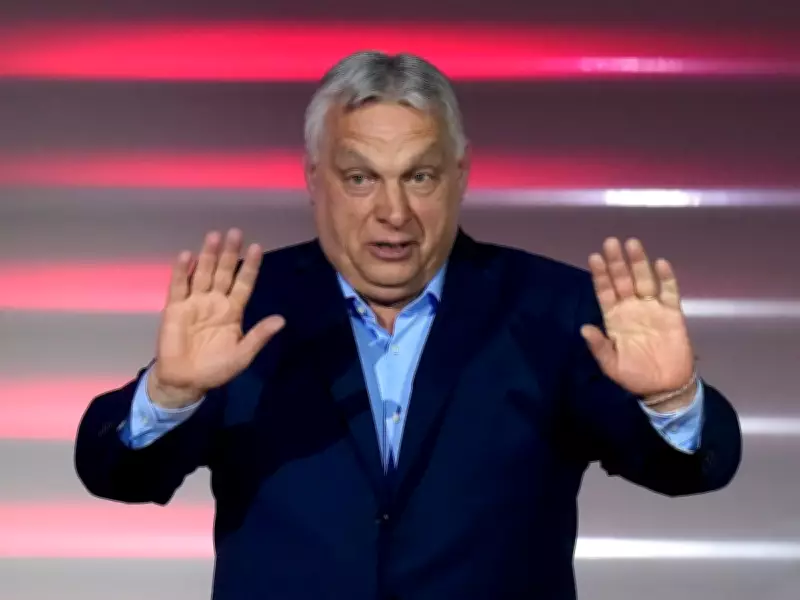
Viktor Orbán has been a constant presence in Hungarian politics since that inaugural democratic election, securing a parliamentary seat in the first vote. He ascended to the prime ministership in 1998 at just 35 years of age, serving as president of his Christian conservative Fidesz party. After leading the opposition from 2002, Orbán returned as prime minister in 2010, maintaining that position until his decisive electoral defeat this month.
The victor, Péter Magyar, represents a particularly striking political narrative—a former loyalist who abandoned Fidesz merely two years prior to orchestrating Orbán's political downfall through a landslide electoral victory.
The Foundations of Orbán's Political Strategy
Orbán's prolonged political success stemmed significantly from his nuanced understanding of Hungary's historical legacy and his ability to leverage that history for electoral advantage. His approach capitalized on suspicion of outsiders, wariness toward neighboring nations, and a profound perception of the world as inherently dangerous—a perspective that justified the construction of protective barriers.
He strategically pitted rural prejudices against urban vanities, demonizing immigrants while erecting razor-wire-topped border fences to exclude refugees. His government launched assaults against LGBTQ+ communities, minority groups, and liberal ideologies in all their manifestations, while systematically bringing judicial systems and media outlets under governmental control.
Orbán adeptly appealed to conspiracy theorists, despite having benefited from early support by Hungarian-born billionaire George Soros. He subsequently portrayed the financier as the central villain in a secret cabal allegedly plotting Europe's Islamicization at the expense of Christian values and national sovereignty. According to Orbán's narrative, Soros's extensive philanthropy concealed a meticulously planned scheme to gain political influence across Europe and propagate what he termed "wokeist intrigues."
International Relations and Democratic Erosion
Orbán served as prime minister during Hungary's accession to NATO and throughout negotiations for European Union membership. However, he increasingly utilized Hungary's position to obstruct Brussels's agenda, impeding efforts to support Ukraine against Russian aggression while cultivating a mutual-admiration relationship with Russian President Vladimir Putin. His government consistently defied sanctions on Russian energy exports.
With Hungary repeatedly identified as Europe's most corrupt nation, Brussels froze 18 billion euros in funding during 2022 over mounting concerns regarding the deterioration of rule-of-law standards within the country.

International Political Alliances
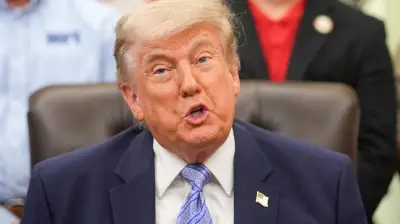
Unsurprisingly, Orbán discovered a valuable political ally in Donald Trump, who shares similar perspectives regarding Europe, Russia, Ukraine, immigration policies, and the personal advantages attainable through political power—along with shared frustrations regarding independent judicial systems.
During the final stages of Hungary's election campaign, U.S. Vice President JD Vance appeared in Budapest, accusing "faceless bureaucrats" in Brussels of interfering in the electoral process—even as he himself actively attempted to influence the outcome. "We have to get Viktor Orbán re-elected as Prime Minister of Hungary, don't we?" he proclaimed to an Orbán-supporting crowd. "I'm here because President Trump and I wish for your success, and we're fighting right here with you." The campaign even featured a telephone call from Trump personally expressing his "love" for the Hungarian leader.
The decisive electoral rejection of Orbán's political approach represents more than merely a change in Hungarian leadership—it signifies a potential turning point for democratic values within Europe, demonstrating that even entrenched autocratic tendencies can be overcome through democratic processes.