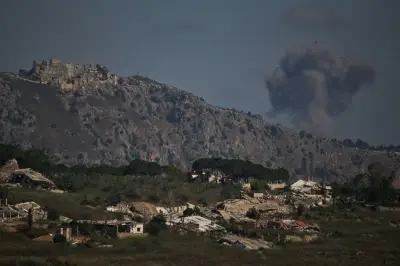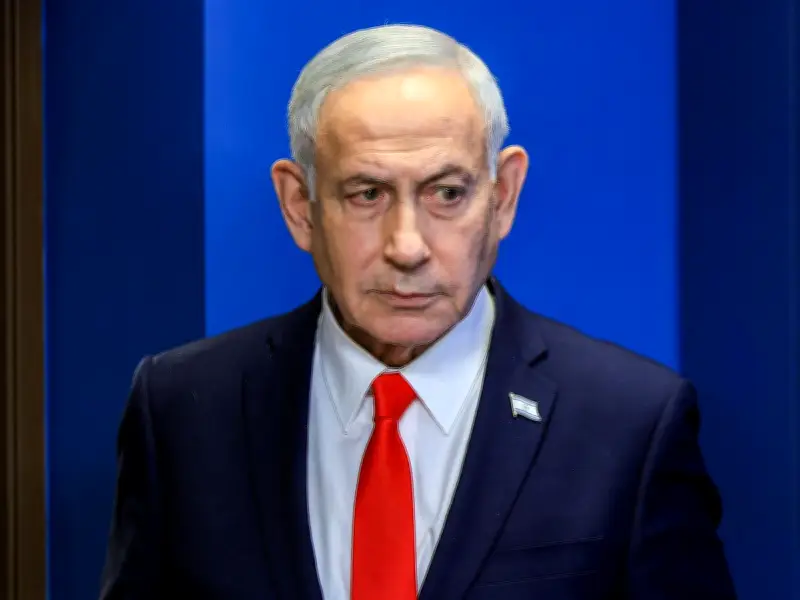
No later than Oct. 27, a divided Israeli electorate will decide whether the leader who steered the country through three inconclusive wars in three years should continue to chart the course. Benjamin Netanyahu, Israel's prime minister on and off since 1996, remains the dominant political figure, but massive security failures during Hamas's October 7 massacre shook many Israelis' faith in a man whose main promise was to keep them safe. His follow-up wars—against Hamas in Gaza, Hezbollah in Lebanon and, with the U.S., against the terror groups' Islamist puppet-master in Iran—have not yet yielded conclusive results.
Netanyahu's Enduring Political Advantages
Along with an established party apparatus, Netanyahu's three decades in politics also brings other political advantages, not least of which is a solid base of support. He is also awaiting the verdict on a six-year corruption trial while managing a division within his nationalist coalition, which incited massive protests in 2023 over plans to limit supreme court powers. While any one of these challenges would likely have sunk a rival candidate, Netanyahu's political obituary has been written more than once, and it may be too early for pundits to start sharpening their pencils.
“He knows the Israeli political scene like the back of his hand,” Ira Robinson, professor emeritus of Jewish Studies at Concordia University, told National Post. “Surviving the Israeli political scene for so many years has taught him a number of tricks, and he is, once again, like him or dislike him, a survivor.”

Coalition Crises and Political Survival
In Israel's multi-party parliament, disparate factions reach delicately balanced compromises, where “simply somebody sneezing can make a coalition crisis,” Robinson said. “Netanyahu has faced probably dozens, if not hundreds, of coalition crises in his career.” “I am certainly far less than 100-per-cent certain, but based on track record, don't count them out,” he added.
Opinion polls have shown former prime minister Naftali Bennett and Gadi Eisenkot, a former chief of staff of the Israeli Defense Forces, in close contention with the 76-year-old Netanyahu. Bennett, a religious former tech investor, formed a party with Yair Lapid, the secular centrist opposition leader and former television personality, earlier this year. The two were in a power-sharing agreement that ended Netanyahu's 12 consecutive years in power in 2021. Bennett's coalition collapsed after a year, with Lapid serving as a caretaker leader for six months. Their ideological gap has raised doubts as to whether their alliance can hold.
Opposition Fragility and Uncertainty
“These are two very different world views that have to be combined, and so any opposition to Netanyahu will be extremely diverse, and for that reason very fragile, just like it was last time, and the very fact that we are in June 2026 and elections will happen no later than October and it's still not clear what the opposition lineup is,” said Csaba Nikolenyi, a political science professor and director of the Azrieli Institute of Israel Studies at Concordia.