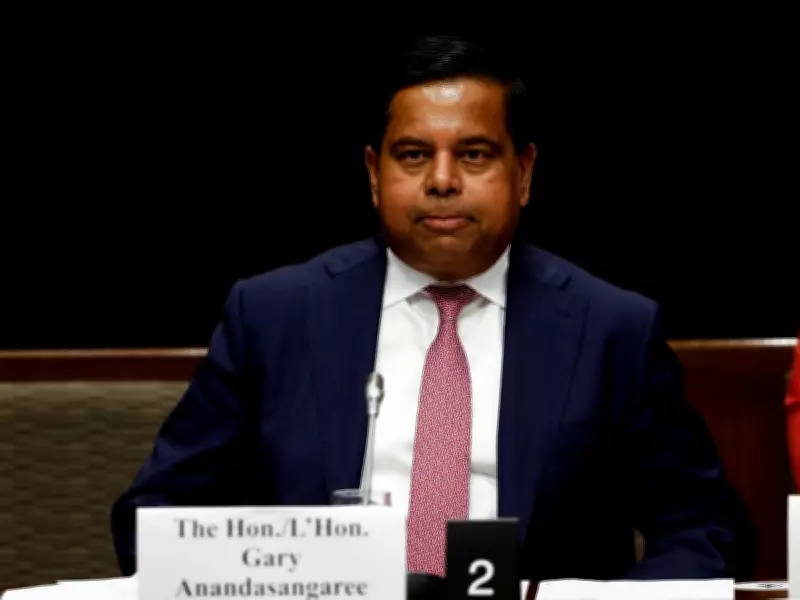
Public Safety Minister Gary Anandasangaree is refusing to disclose a consultation report that guided the federal government's rewrite of its contentious reform granting security agencies and police new powers to intercept communications.
Anandasangaree's refusal to disclose the report baffles two people who participated in the government's consultations, who question the government's desire to be transparent as one of its most sensitive bills is set to be studied at a parliamentary committee starting Tuesday.
It also comes as the Liberal government is pushing Bill C-22, its second iteration of what is known as lawful access reform, after the failure of the first attempt due in part to a lack of public consultation.

No Legitimate Reason to Keep It Secret
"There is no legitimate reason to keep it secret. The only reason to delay its publication is to further avoid meaningful scrutiny of Bill C-22," Tamir Israel of the Canadian Civil Liberties Association (CCLA) said in an interview.
In Bill C-2 tabled right after the election last spring, the Liberal government took its first stab at lawful access reform, which was criticized from all parts for being overly broad and invasive.
The ability to obtain Canadians' private information and intercept communications, known as "lawful access," is one of the most intrusive powers afforded to police and intelligence agencies. Creating such a regime for the digital age in Canada has been the subject of fierce debate for decades.
Government Consultations and Report
So, the government went back to the drawing board, bringing in former federal NDP MP and B.C. cabinet minister Murray Rankin to oversee private consultations with government, civil society, national security specialists and various advocacy groups over the summer and fall.
Earlier this winter, Rankin submitted his report and recommendations on how to proceed with lawful access reform to the government.
Anandasangaree lauded Rankin's work as highly influential while he announced the government's second attempt at lawful access reform via Bill C-22 last month.
The new legislation offers a more tailored set of warranted and unwarranted powers to police, who support the bill en masse. But civil liberty and privacy advocates as well as the Canadian Chamber of Commerce are still deeply concerned with the government's latest proposal.
Refusal to Disclose
But despite promising more transparency with Canadians as to why lawful access reform is necessary, Anandasangaree's office refused National Post's repeated requests for a copy of Rankin's unclassified report.
In a statement, the minister's spokesperson Simon Lafortune said National Post would have to request it via access to information legislation to ensure the necessary redactions are applied.
In a brief interview Monday afternoon, the minister told National Post that because the report was provided by Rankin, a lawyer, to the minister to help him develop the bill, he considered it to be a privileged document.