Twenty-five years ago, the United States and its NATO allies launched Operation Enduring Freedom, the post-9/11 invasion of Afghanistan. In stark contrast, the otherwise grandiose Donald Trump initiated Project Freedom on Monday to reopen the Strait of Hormuz to commercial shipping. However, the effort was short-lived; he called it off on Tuesday after failing to secure support from NATO allies and crucial Gulf partners Saudi Arabia and Kuwait, who denied him access to their bases and airspace.
Feverish diplomacy ensued, particularly with the Saudis rather than the Iranians. By week's end, Saudi Arabia and Kuwait had granted permission for operations to resume. Their initial refusal had rendered Project Freedom futile, but they realized that further embarrassing Trump was not in their interest. The situation might be comical if not for the severe suffering caused by the strait's closure, including stranded mariners and energy rationing across Asia.
The Rideau Canal: A Historical Parallel
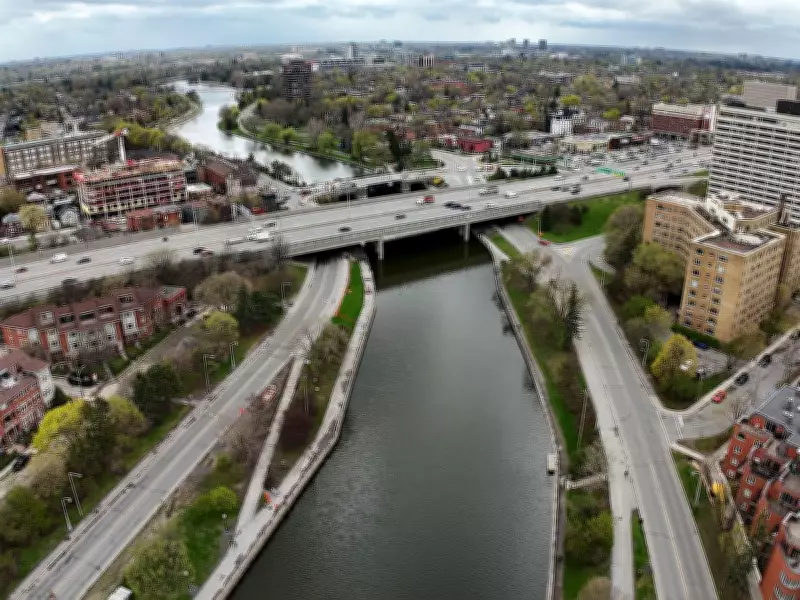
This modern predicament brings to mind the Rideau Canal, whose construction began 200 years ago this fall. During his recent Washington visit, King Charles joked about the War of 1812, recalling how British and Canadian forces burned the White House in 1814, forcing First Lady Dolly Madison to flee after saving the portrait of George Washington. It is a story Britons and Canadians delight in telling Americans.

Conrad Black, in the third volume of his Political and Strategic History of the World, characterizes the War of 1812 as "farcical in its beginning and often in between," but notes that "the participant in the late conflict that had the best war was Canada." A good war, however, does not guarantee a good peace. Canada survived the American invasion but remained precarious.
Strategic Vulnerability
Canada's greatest vulnerability was the St. Lawrence River, which from Lake Ontario to Cornwall formed the border between present-day Ontario and New York State. In any hostilities, American forces on the south shore could easily sink British or Canadian ships, cutting off Montreal from Kingston and Toronto. This is the same challenge Trump faces in the Persian Gulf: one side cannot control a joint waterway without occupying the other side or deploying overwhelming force.
Project Freedom required not only U.S. Navy ships to escort freighters and tankers but also significant air cover. Saudi Arabia and Kuwait refused the necessary bases and airspace because a strait opened only by overwhelming and expensive force is not truly open. It remains hostage to Iranian hostility, and as long as the Iranian regime endures, that hostility persists.