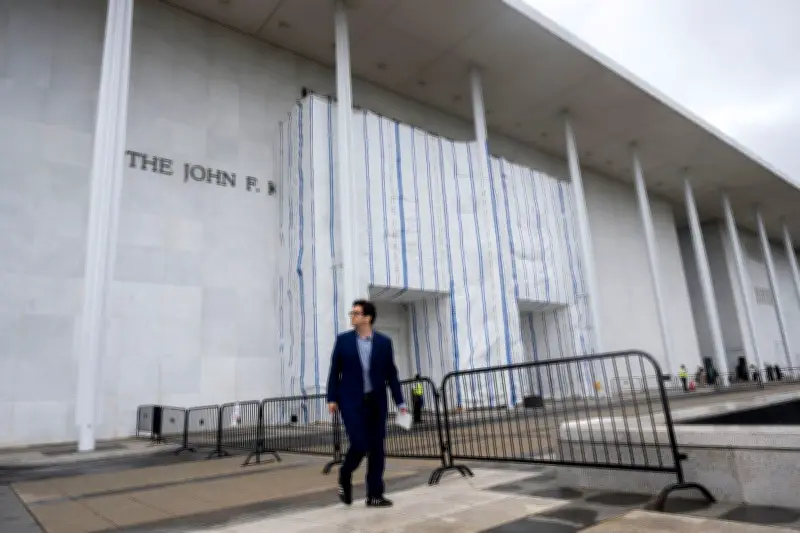
A federal appeals court has denied a request to restore former President Donald Trump's name to the John F. Kennedy Center for the Performing Arts while his legal challenge to the removal proceeds. The decision, issued Wednesday by a three-judge panel of the U.S. Court of Appeals for the District of Columbia Circuit, keeps Trump's name off the center's facilities for now.
Background of the Dispute
The Kennedy Center board voted in January to remove Trump's name from its building and programs, citing his role in the January 6, 2021, Capitol riot. The board, appointed by President Joe Biden, argued that Trump's actions violated the center's mission of promoting unity and excellence in the arts. Trump sued in February, claiming the board violated his First Amendment rights and exceeded its authority.
U.S. District Judge Timothy J. Kelly, a Trump appointee, ruled in April that the board had the legal right to remove the name, and that Trump did not show a likelihood of success on the merits. Trump appealed, and his lawyers asked the appeals court to temporarily restore his name while the case is pending, arguing that the removal caused irreparable harm to his reputation.

Court's Ruling
The appeals panel, in a brief order, denied the emergency motion without comment. The panel included Judges Sri Srinivasan, an Obama appointee; Justin Walker, a Trump appointee; and J. Michelle Childs, a Biden appointee. The ruling means Trump's name will remain absent from the Kennedy Center's main building, which includes the Concert Hall, Opera House, and Eisenhower Theater.
According to court records, the Kennedy Center has already removed Trump's name from all signage, plaques, and promotional materials. The center's president, Deborah Rutter, said in a statement that the institution is focused on its mission of presenting world-class performances and educational programs.
Trump's Response
Trump criticized the decision on his social media platform, calling it "another example of the Biden administration's weaponization of government against political opponents." His legal team said they would continue to pursue the appeal on the merits. "We believe the First Amendment protects President Trump from viewpoint discrimination by a government-funded entity," said Trump attorney Alina Habba.
Legal Implications
Legal experts say the case raises novel questions about the extent to which government-appointed boards can remove names of public figures from public facilities. The Kennedy Center is a federally funded institution, but its board is appointed by the president and confirmed by the Senate. The center receives about $25 million annually in federal appropriations, according to its 2025 annual report.
"This is a case about whether a government entity can disassociate itself from a former president based on his conduct," said Jonathan Turley, a law professor at George Washington University. "The court's denial of the emergency motion suggests that the panel believes Trump's chances on appeal are not strong enough to warrant interim relief."
Next Steps
The full D.C. Circuit Court of Appeals could still hear the case, or Trump could petition the Supreme Court. However, legal observers note that the Supreme Court rarely intervenes in such preliminary matters. The underlying lawsuit is still pending, and a trial has not been scheduled. The Kennedy Center has said it will continue to operate as usual, hosting performances and events under its original name.