Irish Government Survives Confidence Vote Amid Fuel Protest Crisis
The Irish government has narrowly survived a parliamentary confidence vote concerning its management of widespread fuel protests that have gripped the nation. The vote, held on April 15, 2026, saw the coalition government secure enough support to remain in power, despite significant opposition criticism over its response to the escalating demonstrations.
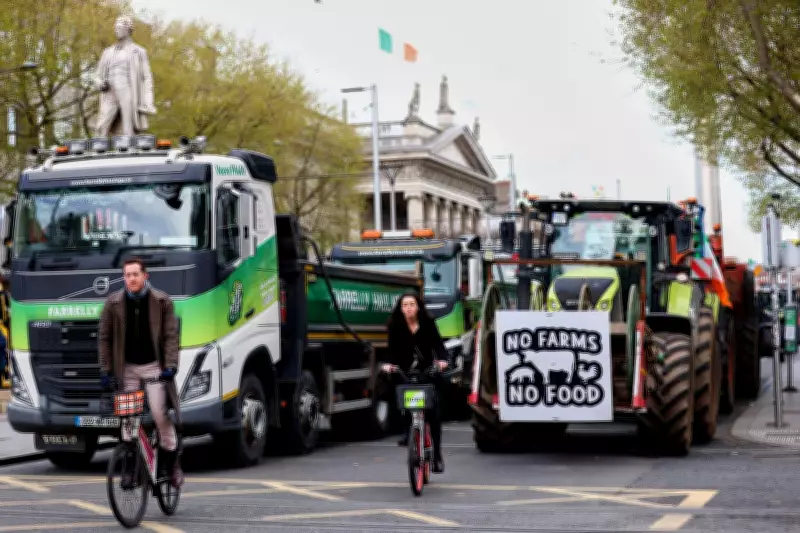
Protests Paralyze Dublin Streets
For five consecutive days, the National Fuel Protest has brought parts of Dublin to a standstill. On April 11, 2026, cyclists navigated past a blockade of tractors occupying O'Connell Street, one of the city's main thoroughfares, highlighting the disruptive nature of the demonstrations. Protesters, including farmers, truckers, and other groups affected by rising fuel costs, have demanded immediate government action to address the economic strain.
Political Fallout and Government Defense
The confidence vote was triggered by opposition parties accusing the government of inadequate leadership during the crisis. Critics argued that delayed interventions and poor communication exacerbated public frustration. In defense, government representatives emphasized ongoing efforts to negotiate with protest leaders and explore policy adjustments, including potential temporary tax relief measures, though details remain under discussion.

The outcome of the vote underscores the fragile political landscape in Ireland, as the government now faces pressure to deliver tangible solutions swiftly. Analysts note that while survival in parliament provides a temporary reprieve, failure to resolve the protest issues could lead to renewed political instability.
Broader Context of Fuel Unrest
These protests are part of a larger pattern of fuel-related unrest across several countries, driven by global price surges and environmental policy shifts. In Ireland, the demonstrations have drawn attention to rural and industrial communities disproportionately impacted by energy costs. The government's handling of the situation is being closely watched, with implications for future economic and environmental policies.
As the protests continue, all eyes are on Dublin to see if the government can bridge divides and implement effective measures to calm the unrest and address the underlying grievances of the protesters.