Iran's Leadership Crisis After Khamenei's Killing
The assassination of Iran's supreme leader Ayatollah Ali Khamenei, combined with ongoing U.S.-Israeli military operations, has created unprecedented uncertainty within Iran's political structure. This dramatic development comes at a critical moment for the Islamic Republic, which now faces complex questions about succession, internal power dynamics, and potential regime transformation.
A Fragile Succession Process
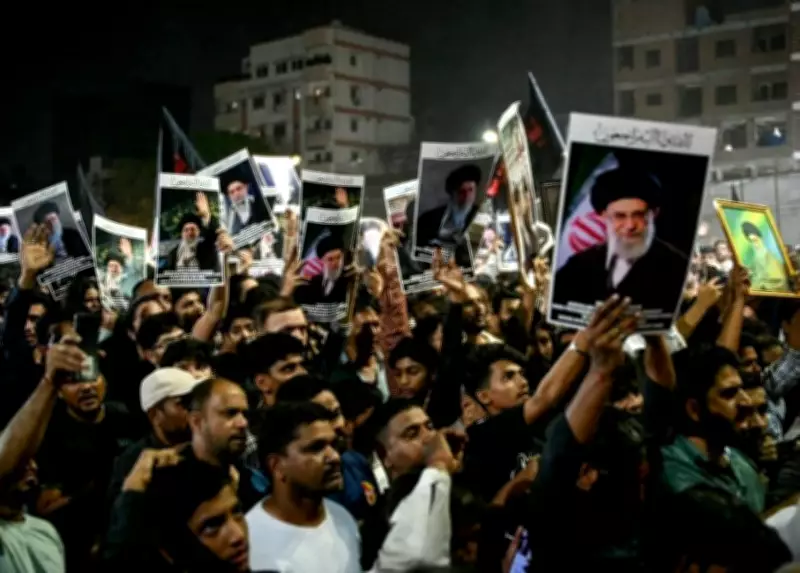
According to Pierre Razoux, director of the Mediterranean Foundation for Strategic Studies, Iran's leadership appears to be maintaining tight control through extensive security measures. "The country appears 'tightly controlled' after authorities closed universities, deployed security forces in cities, and cut internet access," Razoux observed. "Everything is being done to prevent protests. As long as the public is not convinced that the repressive apparatus has been neutralized, they are unlikely to take to the streets again."
Despite these measures, Iran's political system does have established procedures for supreme leader succession. Razoux emphasized that Khamenei's "removal does not mean the end" for a system designed with multiple centers of power and redundancies. He anticipates a scenario of "continuity of the regime with new rules of the game—perhaps to the detriment of the clerics, but with the same people in charge."

Potential Power Rivalries Emerge
French-Iranian sociologist Azadeh Kian has identified significant potential for internal conflict following Khamenei's death. She suggested that the killing "could give rise to significant rivalries within the circles of power between the Revolutionary Guards and the civilian leadership." However, Kian noted that "for now, they are all working together to keep the system in place."
Researcher Theo Nencini of Sciences Po Grenoble emphasized the critical importance of the succession decision: "The entire direction of the regime will depend on the choice of the new supreme leader." This selection process will likely determine whether Iran maintains its current clerical structure or shifts toward different governance models.
The Revolutionary Guards' Growing Influence
A particularly significant development involves the Islamic Revolutionary Guard Corps (IRGC), Iran's ideological military force. Despite losing commander Mohammad Pakpour in recent strikes, the IRGC remains an exceptionally well-organized institution with substantial influence across Iranian society, politics, and the economy.
"The alternative is a takeover by the Pasdaran," Razoux stated, using another name for the Revolutionary Guards. Nencini confirmed that "the rebalancing of power in favor of the Revolutionary Guards has already happened" in recent years, suggesting this trend might accelerate following Khamenei's death.
Nencini elaborated on potential outcomes: "A transition toward a more militarized regime under their leadership is a possibility—a more conventional military regime, without the current Shiite religious framework. Still, I find it hard to imagine them doing away with the religious veneer altogether."
External Pressures and Internal Calculations
The geopolitical context adds further complexity to Iran's leadership transition. At the beginning of the air campaign, U.S. President Donald Trump urged Iranians to seize power once military operations concluded, having previously voiced support for mass protests against the clerical leadership that peaked in January before a deadly crackdown.
Kian speculated that Trump might be "looking to come to an understanding with a more moderate wing of the regime," suggesting potential diplomatic maneuvering behind the scenes. This external pressure creates additional variables in Iran's internal power calculations.
The situation bears some resemblance to developments in Venezuela earlier this year, where after U.S. forces captured President Nicolas Maduro, Vice President Delcy Rodriguez took charge with Trump's endorsement, and the regime survived in return for concessions to Washington. Whether similar dynamics might unfold in Iran remains uncertain.

As Iran navigates this critical transition period, the balance between military and civilian leadership, the role of religious institutions, and responses to external pressures will collectively determine the country's future trajectory in the post-Khamenei era.