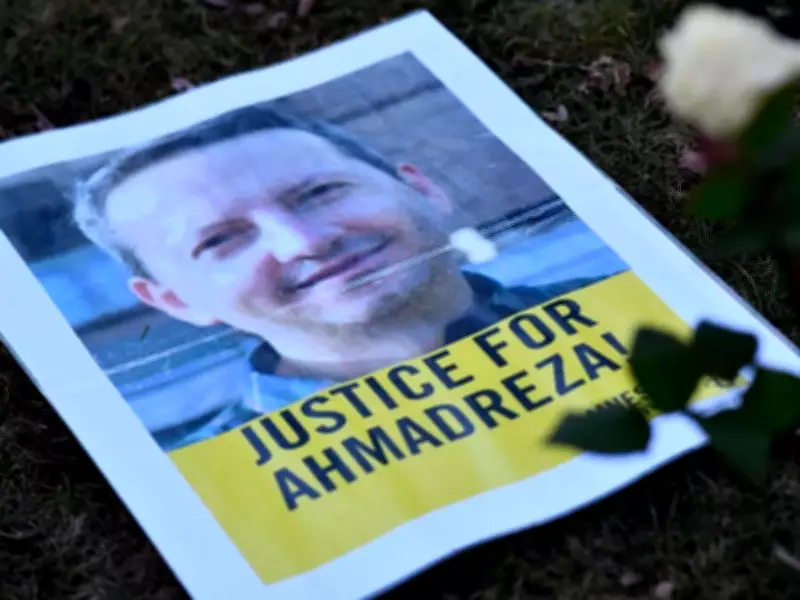
The case of Ahmadreza Djalali, a Swedish-Iranian physician and disaster medicine scholar, should have been resolved years ago. Affiliated with leading European institutions, Djalali has spent the past decade in Evin Prison under a death sentence issued on fabricated charges following a sham trial. His case is an emblematic example of state hostage-taking and the Islamic Republic's weaponization of its judiciary, reflecting a pervasive pattern of executions, hostage diplomacy, and escalating grave human rights violations. These concerns have become even more urgent amid rising geopolitical tensions and the deepening challenge of impunity.
A Grave Miscarriage of Justice
Djalali's case represents a grave miscarriage of justice for both Sweden and the international community. His exclusion from the 2024 prisoner exchange, in which Swedish diplomat Johan Floderus and Iranian-Swedish national Saeed Azizi were released in return for Hamid Nouri, is particularly striking. The landmark universal jurisdiction case against Nouri resulted in his 2022 conviction for involvement in the 1988 mass executions of political prisoners, demonstrating the capacity of Swedish courts to hold perpetrators of international crimes accountable. Yet Nouri was later released without securing Djalali's freedom, underscoring inconsistent standards and a lack of political will to pursue his case, consistent with Sweden's handling of other emblematic cases of arbitrary detention of dual nationals, including Dawit Isaak and Gui Minhai.
Iran's Pattern of Coercion
In recent years, Iran has amplified a pattern of using arbitrary detention, persecution, prosecution, and capital punishment not for justice but as tools of coercion and geopolitical leverage. Dual nationals, journalists, academics, lawyers, human rights defenders, and civil society activists are especially vulnerable, caught within a system where legal opacity meets strategic calculation. Iran's reported execution figures, rising sharply from 2023 through 2025, reflect a systemic architecture in which the judiciary functions not as an independent adjudicator but as a corrupt extension of sovereign authority, devoid of due process and fundamental rights enshrined in Iran's own Constitution.

Djalali's Suffering
Djalali's case epitomizes this structure, with legal deficiencies that are not incidental but indicative of a broader practice subordinating procedural safeguards to political expediency. Arrested in April 2016 during an academic visit to Iran, he was accused of espionage on false grounds never substantiated. His detention has included prolonged solitary confinement, restricted access to legal counsel, and cruel, inhuman treatment and torture. His case also highlights transnational repression, as his family in Sweden continues to face harassment, surveillance, and intimidation by Iranian authorities, demonstrating that the consequences of arbitrary detention extend well beyond national borders.