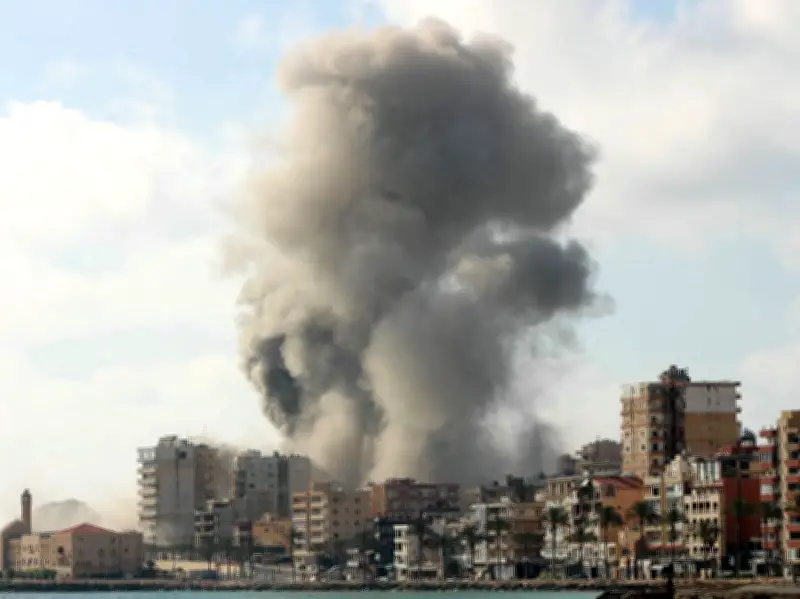
Iran has signaled an end to its current military operations against Israel, just after U.S. President Donald Trump stated that both sides were looking to agree to an immediate ceasefire. This development follows a series of retaliatory strikes that threatened to derail negotiations aimed at ending the war in the Middle East.
Iran's Military Command Statement
Iran's central military command announced that if Israel continued its attacks, including in southern Lebanon, "much harsher and more crushing actions than before will be on the way," according to the semi-official Fars news agency. The decision underscores how the conflict in Lebanon has become a pivotal issue in the negotiations.
Trump's Role in Ceasefire Efforts
Trump, in a Truth Social post, indicated that final talks on a truce were "proceeding, subject to ignorance or stupidity getting in its way." He had earlier demanded an end to the fighting after Iran fired ballistic missiles at Israel on Sunday and Monday, and Israel responded with strikes on military targets in western and central Iran.

Israel also targeted Iran's Karun petrochemical company in Mahshahr on Monday. Tehran warned it would target all oil and gas facilities linked to Israel, the United States, and their allies in the region if attacks on its energy infrastructure continue, as reported by Fars.
Escalation and Regional Impact
Iran began its offensive after Israeli strikes on Beirut, marking a rare instance of Tehran defending the allied militant group Hezbollah. The fighting poses the most serious challenge yet to a ceasefire that took effect on April 8, which had halted a war that began in February when the U.S. and Israel started bombing Iran. The conflict has left thousands dead across the Middle East, disrupted global energy flows, and spurred a rally in oil prices, fueling fears of global inflation.
The latest violence erupted despite Trump's warning on Sunday that renewed escalation could derail efforts to secure a new, 60-day truce between Washington and Tehran. Such a truce would pave the way for negotiations on a broader agreement to end the conflict permanently.
Military Preparations and Regional Reactions
The Israel Defense Forces view the campaign against Iran as lasting several days and are preparing for large-scale mobilization of reserve soldiers, as reported by Army Radio. Iran has also stated it is prepared for a long-term war with Israel and strikes on American interests, according to the semi-official Tasnim news agency.
The Iran-backed Houthis claimed to have launched a missile barrage on Israel from Yemen and announced a "complete and total ban on maritime navigation for the Israeli enemy in the Red Sea," according to a statement on their Telegram channel. They vowed to ramp up attacks depending on the conflict's evolution, citing increased pressure by the U.S. and Israel on Iran and Lebanon.
Saudi Arabia issued a missile alert in an area near the Prince Sultan Airbase, which hosts U.S. forces, as reported by the Associated Press.