Iran Selects New Supreme Leader as Regional Conflict Escalates
Iran has reportedly appointed a new supreme leader amid an intensifying war in the Middle East that entered its ninth day. The Islamic Republic maintained its offensive operations, targeting a water desalination plant in Bahrain, while Israel conducted retaliatory airstrikes on fuel depots in Tehran and threatened Iran's power grid infrastructure.
Military Actions and Environmental Warnings
The overnight attacks into Sunday occurred as Persian Gulf nations continued facing incoming missiles and drones from Iranian forces. The Red Crescent organization issued warnings about potential toxic acid rain following the Israeli strikes on Iranian oil facilities. Tehran has not disclosed the identity of the newly selected leader who will guide the nation through this escalating conflict.
President Donald Trump announced that the United States will consider expanding its military strikes against Iran, acknowledging how the conflict has already disrupted global energy markets and caused widespread flight cancellations across the region.

Regional Defense and Economic Impact
The United Arab Emirates, Kuwait, Saudi Arabia, and Bahrain all reported successfully intercepting Iranian attacks overnight. In response to the near-closure of the crucial Strait of Hormuz—through which approximately one-fifth of global energy exports transit—the UAE and Kuwait began reducing their oil production capacity.
Bahrain's government confirmed that an Iranian drone attack caused material damage to a water desalination facility, though officials assured the public that water supplies remained unaffected. This attack followed Tehran's accusations that the United States had targeted one of Iran's own water treatment plants.
Diplomatic Statements and Military Posturing
President Masoud Pezeshkian stated he had instructed Iranian military forces not to attack any nation that isn't actively striking the Islamic Republic, offering apologies to neighboring countries affected by the conflict. Trump characterized these remarks as amounting to surrender, yet Iran continued its offensive operations regardless.
Ali Larijani, secretary of Iran's Supreme National Security Council, declared on state television: "When the enemy attacks us from bases in the region, we respond and will continue to respond. Countries in the region must either prevent the U.S. from using their territory against Iran themselves, or we will."
Sustained Military Capacity and Environmental Concerns
On Sunday, Pezeshkian clarified that Iran's adversaries had drawn "naive conclusions" from his earlier statements, emphasizing that Tehran feels "compelled" to respond to aggression carried out by other nations. According to state news agency IRIB, Iran's armed forces possess the capacity to sustain at least six months of high-intensity warfare at the current pace and plan to deploy more advanced, rarely-used long-range missiles in coming days.
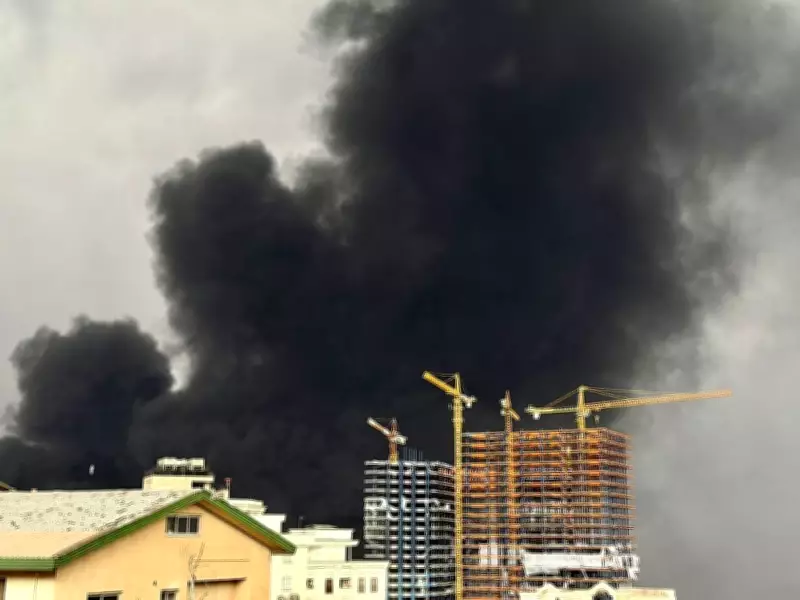
Israeli jets specifically targeted Iranian oil depots in Tehran's Kuhak and Shahran districts as well as the nearby city of Karaj. Explosions reverberated through parts of the capital, where authorities advised residents to wear protective face masks and remain indoors due to air pollution risks from debris clouds generated by the attacks.
The conflict has significantly rattled financial hubs throughout the Persian Gulf region, with water desalination plants—critical infrastructure providing most fresh drinking water for Gulf countries—becoming vulnerable targets that could compound the humanitarian impact of this expanding war.