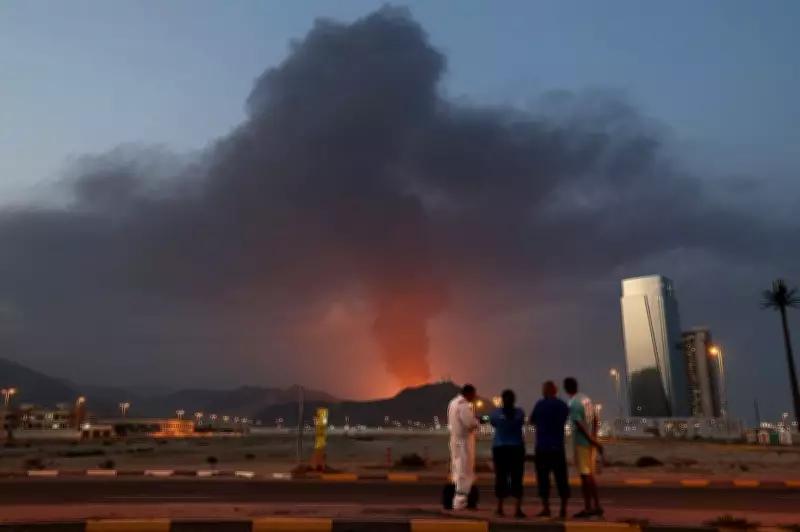
In a significant escalation of regional hostilities, Iran conducted a drone strike on the United States Embassy in Riyadh, the capital of Saudi Arabia, early Tuesday. This aggressive action comes as part of a broader military confrontation that has intensified following the killing of Iran's Supreme Leader Ayatollah Ali Khamenei by U.S. and Israeli airstrikes on Saturday.
Regional Conflict Expands Rapidly
The drone attack represents a direct assault on American diplomatic presence in the region. According to reports, explosions were heard overnight in Tehran as retaliatory strikes continued. The Iranian Red Crescent Society confirmed that at least 787 people have been killed in Iran since the conflict began, highlighting the severe human toll of the ongoing hostilities.
Lebanon Becomes New Front in Conflict
The violence has spread beyond Iran's borders, with the Iranian-supported militant group Hezbollah firing missiles at Israel from Lebanon on Monday. In response, Israel retaliated with airstrikes on Beirut and deployed additional troops to strategic positions along the southern Lebanese border. This expansion of the conflict threatens to draw multiple regional actors into direct confrontation.

International Reactions and Economic Impact
China Issues Stern Warning
Chinese Foreign Minister Wang Yi delivered a strong message to Israeli Foreign Minister Gideon Sa'ar during a phone conversation, warning of "great repercussions" from the military strikes on Iran. China condemned the attacks and called for an immediate cessation of military operations to prevent further escalation. Wang emphasized that China has consistently advocated for political solutions to the Iran nuclear issue and noted that progress in recent talks between Iran and the U.S. had been disrupted by the military actions.
Oil Production Disrupted as Prices Surge
The conflict has severely impacted global energy markets. Iraq's Ministry of Oil announced it will halt production at the southern Rumaila oil fields near Basra due to disruptions in the Strait of Hormuz. The ongoing war has brought tanker traffic through this critical waterway to a standstill, causing crude oil prices to spike worldwide. Approximately one-fifth of global oil passes through the Strait of Hormuz, which connects the Persian Gulf to international shipping routes.
Militant Groups Issue Threats
Kataib Hezbollah, an Iranian-backed militant group in Iraq, issued veiled threats against Jordan, Saudi Arabia, and the United Arab Emirates. The group claimed that American aircraft targeting their camps originated from a U.S. base in Jordan and criticized Saudi Arabia and the UAE for their statements regarding Iranian attacks. The militants warned these Gulf nations to "adjust their statements according to their true size" and accused them of supporting what they termed the "Zionist-American project."
Global Responses and Market Reactions
Ukraine Offers Drone Technology Exchange
Ukrainian President Volodymyr Zelenskyy announced that Ukraine is prepared to exchange its domestically produced interceptor drones for American-made PAC-3 air defense missiles. Ukraine urgently needs these missiles to counter Russian cruise and ballistic missile attacks in its ongoing conflict with Russia. The country has developed effective interceptors to combat Iranian-designed Shahed drones used by Russian forces.
Financial Markets React to Escalation
Global financial markets experienced significant volatility following the escalation. The Dow Jones Industrial Average dropped 880 points (1.8%), while the S&P 500 and Nasdaq composite both fell 1.6% and 1.8% respectively in early trading. The sell-off spread from European and Asian markets to Wall Street as investors grew increasingly concerned that the widening conflict could cause more sustained economic damage than initially anticipated.
The situation remains fluid as diplomatic efforts continue amid ongoing military operations. The international community watches closely as this multi-front conflict threatens to destabilize the entire Middle East region and impact global economic stability.